INTRODUCTION
Long before Thanksgiving became the cherished national holiday we celebrate today, its foundation was laid in prayer, gratitude, and the acknowledgment of God’s providence. On October 3, 1789, President George Washington issued America’s first Presidential Thanksgiving Proclamation, calling upon the people of this new nation to unite in giving thanks to Almighty God for His protection, provision, peace, and the remarkable opportunity to establish a government founded upon liberty and justice. Washington recognized that the blessings of a nation were not simply the result of human achievement, but gifts worthy of humble acknowledgment before the Lord.
More than seventy years later, in the midst of a devastating Civil War, President Abraham Lincoln renewed that call to gratitude. His 1863 Thanksgiving Proclamation reminded Americans that even amid sorrow, uncertainty, and national division, God's mercies had not ceased. He urged the nation to give thanks for its blessings while praying for those who were suffering, mourning, and longing for peace. Together, these historic proclamations remind us that genuine thanksgiving is more than a holiday tradition or a gathering around a table. It is a posture of the heart—one that recognizes God's goodness in seasons of abundance as well as in times of hardship, and calls us to humility, compassion, unity, and prayer.
As we reflect upon the spiritual roots of this national holiday, may we remember the One from whom all blessings flow. May the Lord fill our hearts with gratitude, our homes with peace, and our nation with healing and reconciliation. Amen.
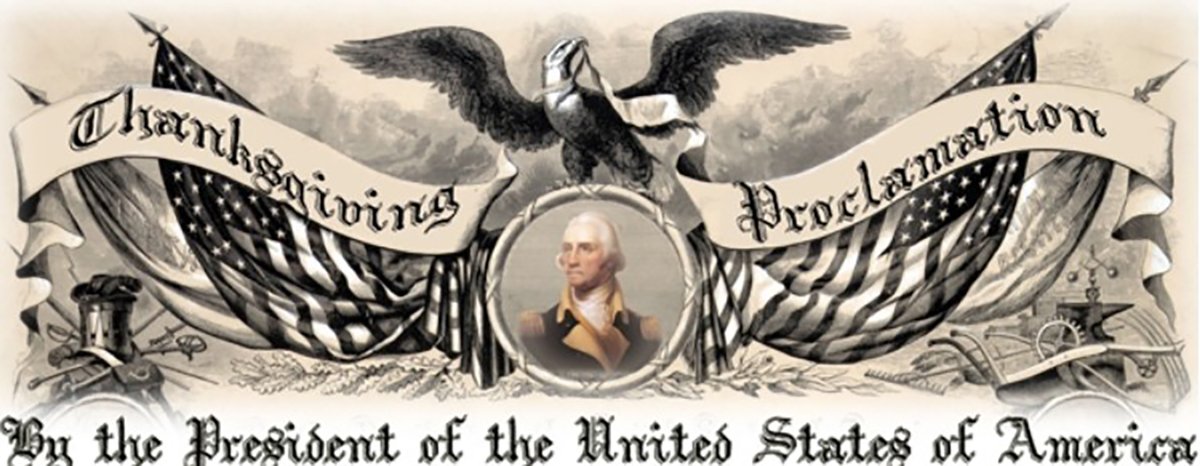
George Washington Issues the
First Thanksgiving Proclamation
Under the New Federal Constitution.
On September 25, 1789, as the momentous first Federal Congress drew to its close in New York, the new national capital, Representative Elias Boudinot introduced a resolution calling on President Washington to “recommend to the people of the United States a day of public thanksgiving and prayer...acknowledging, with grateful hearts, the many signal favors of Almighty God, especially by affording them an opportunity peaceably to establish a form of government for their safety and happiness.”
A leading opponent of the resolution, Thomas Tudor Tucker, asked, “Why should the President direct the people to do what, perhaps, they have no mind to do?” The skeptical Congressman noted that the people “may not be inclined to return thanks for a Constitution until they have experienced that it promotes their safety and happiness.” He also argued that it was a religious matter and thus proscribed to the new government. Regardless, the House passed the resolution — one of their last pieces of business before completing the proposed Bill of Rights. The Senate concurred three days later, and a delegation was sent to meet the President. George Washington, who had in fact anticipated the question in a letter to James Madison a month earlier, readily agreed.
On October 3, George Washington signed the document, America’s first Presidential Thanksgiving Proclamation. Washington employed the exact language of the resolution to begin his proclamation, though he went further, giving thanks for “tranquility, union, and plenty” and asking the Almighty to guide the new nation’s leaders and government. He used the same approach a year later when he wrote what is now one of his most celebrated letters: “For happily the Government of the United States gives to bigotry no sanction, to persecution no assistance, [and] requires only that they who live under its protection should demean themselves as good citizens, in giving it on all occasions their effectual support.” Washington willingly echoed Moses Seixas’s stance on tolerance and added to it, just as he did in his Thanksgiving Proclamation when asking the Almighty “To render our national government a blessing to all the people, by constantly being a Government of wise, just, and Constitutional laws, discreetly and faithfully executed and obeyed.”
Establishing the National Holiday
The American public enthusiastically accepted Washington’s Thanksgiving Proclamation. Newspapers printed it, citizens celebrated across the country, and churches used the occasion to solicit donations for the poor. George Washington personally responded, contributing $25. In 1795, noting “the unexampled prosperity of all classes of our citizens,” Washington issued his only other Presidential Thanksgiving Proclamation, calling on Americans to “acknowledge our many and great obligations to Almighty God and to implore him to continue and confirm the blessings we experience.”
John Adams and James Madison would also issue Thanksgiving Proclamations, but days of Thanksgiving typically remained state holidays. Abraham Lincoln was the next president to issue national Thanksgiving Proclamations. He began by closing government departments for a day in 1861, and in March 1863, he called for a day of “national humiliation, fasting, and prayer.” He issued another, assigning August 6, 1863, as a day of “National Thanksgiving.” Soon after, Lincoln was moved by a letter from Sarah Josepha Hale, who had lobbied the four prior presidents unsuccessfully to make Thanksgiving a third national holiday in addition to Independence Day and Washington’s Birthday. On October 3, 1863, exactly 74 years after George Washington’s Proclamation, Lincoln established the fourth Thursday in November as a national day of Thanksgiving, setting the precedent that remains to this day.
Transcript of the Proclamation
By the President of the United States of America
A Proclamation
Whereas it is the duty of all Nations to acknowledge the providence of Almighty God, to obey his will, to be grateful for his benefits, and humbly to implore his protection and favor--and whereas both Houses of Congress have by their joint Committee requested me to recommend to the People of the United States a day of public thanksgiving and prayer to be observed by acknowledging with grateful hearts the many signal favors of Almighty God especially by affording them an opportunity peaceably to establish a form of government for their safety and happiness.”
Now therefore I do recommend and assign Thursday the 26th day of November next to be devoted by the People of these States to the service of that great and glorious Being, who is the beneficent Author of all the good that was, that is, or that will be--That we may then all unite in rendering unto him our sincere and humble thanks--for his kind care and protection of the People of this Country previous to their becoming a Nation--for the signal and manifold mercies, and the favorable interpositions of his Providence which we experienced in the course and conclusion of the late war--for the great degree of tranquility, union, and plenty, which we have since enjoyed--for the peaceable and rational manner, in which we have been enabled to establish constitutions of government for our safety and happiness, and particularly the national One now lately instituted--for the civil and religious liberty with which we are blessed; and the means we have of acquiring and diffusing useful knowledge; and in general for all the great and various favors which he hath been pleased to confer upon us.
And also that we may then unite in most humbly offering our prayers and supplications to the great Lord and Ruler of Nations and beseech him to pardon our national and other transgressions--to enable us all, whether in public or private stations, to perform our several and relative duties properly and punctually--to render our national government a blessing to all the people, by constantly being a Government of wise, just, and constitutional laws, discreetly and faithfully executed and obeyed--to protect and guide all Sovereigns and Nations (especially such as have shewn kindness unto us) and to bless them with good government, peace, and concord--To promote the knowledge and practice of true religion and virtue, and the increase of science among them and us--and generally to grant unto all Mankind such a degree of temporal prosperity as he alone knows to be best.
Given under my hand at the City of New York the third day of October in the year of our Lord 1789.
Go. Washington
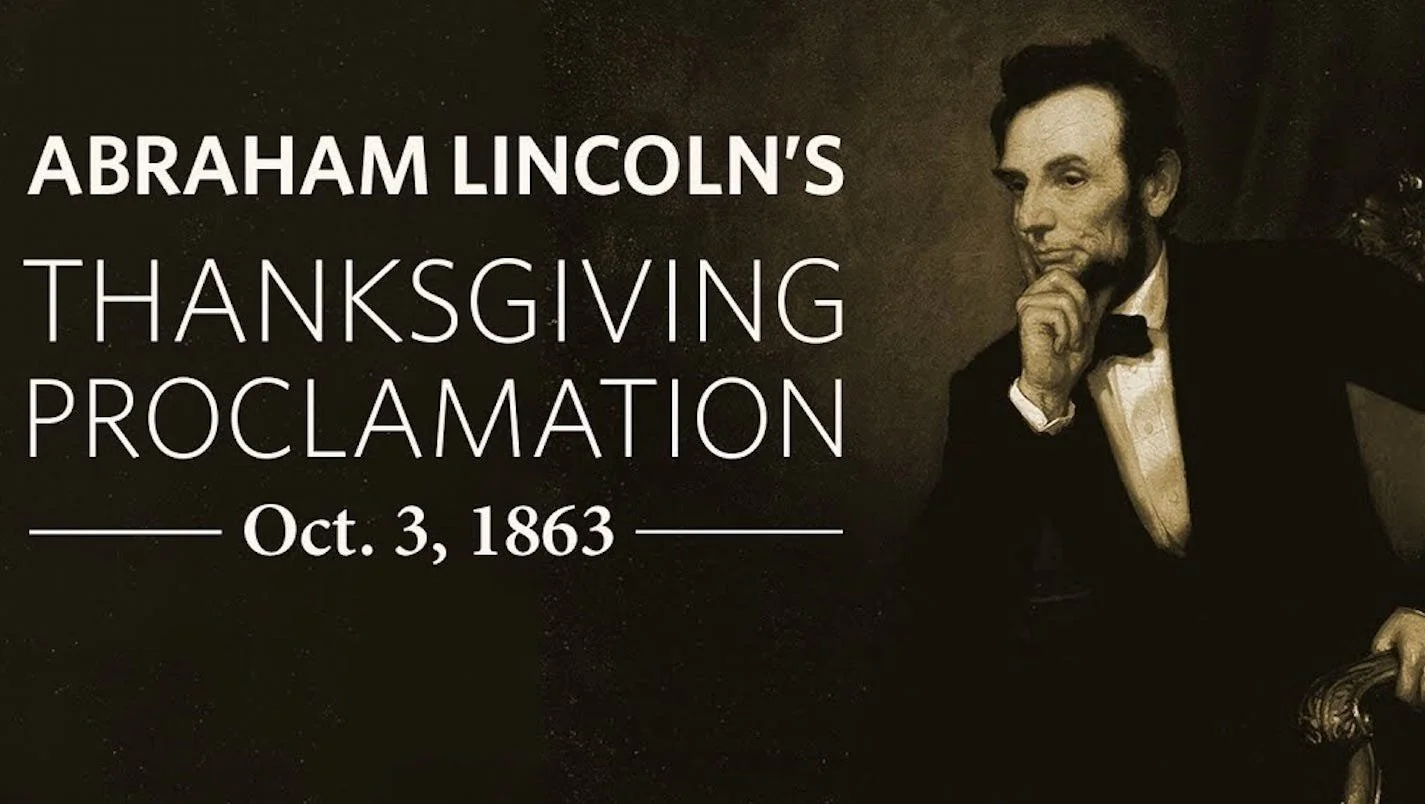
Proclamation Transcript
By the President of the United States
A Proclamation
The year that is drawing toward its close has been filled with the blessings of fruitful fields and healthful skies. To these bounties, which are so constantly enjoyed that we are prone to forget the source from which they come, others have been added, which are of so extraordinary a nature that they cannot fail to penetrate and even soften the heart which is habitually insensible to the ever-watchful providence of Almighty God.
In the midst of a civil war of unequaled magnitude and severity, which has sometimes seemed to foreign states to invite and provoke their aggressions, peace has been preserved with all nations, order has been maintained, the laws have been respected and obeyed, and harmony has prevailed everywhere, except in the theater of military conflict; while that theater has been greatly contracted by the advancing armies and navies of the Union.
Needful diversions of wealth and of strength from the fields of peaceful industry to the national defense have not arrested the plow, the shuttle, or the ship; the ax has enlarged the borders of our settlements, and the mines, as well of iron and coal as of the precious metals, have yielded even more abundantly than heretofore. Population has steadily increased, notwithstanding the waste that has been made in the camp, the siege, and the battlefield, and the country, rejoicing in the consciousness of augmented strength and vigor, is permitted to expect continuance of years with large increase of freedom.
No human counsel hath devised, nor hath any mortal hand worked out these great things. They are the gracious gifts of the Most High God, who while dealing with us in anger for our sins, hath nevertheless remembered mercy.
It has seemed to me fit and proper that they should be solemnly, reverently, and gratefully acknowledged as with one heart and one voice by the whole American people. I do, therefore, invite my fellow-citizens in every part of the United States, and also those who are at sea and those who are sojourning in foreign lands, to set apart and observe the last Thursday of November next as a Day of Thanksgiving and Praise to our beneficent Father who dwelleth in the heavens. And I recommend to them that, while offering up the ascriptions justly due to Him for such singular deliverances and blessings, they do also, with humble penitence for our national perverseness and disobedience, commend to His tender care all those who have become widows, orphans, mourners, or sufferers in the lamentable civil strife in which we are unavoidably engaged, and fervently implore the interposition of the Almighty hand to heal the wounds of the nation, and to restore it, as soon as may be consistent with the Divine purposes, to the full enjoyment of peace, harmony, tranquility, and union.
In testimony whereof, I have hereunto set my hand and caused the seal of the United Stated States to be affixed.
Done at the city of Washington, this third day of October, in the year of our Lord one thousand eight hundred and sixty-three, and of the Independence of the United States the eighty-eighth.
Abraham Lincoln
By the President: William H. Seward. Secretary of State