INTRODUCTION
As the world continues to wrestle with division, war, uncertainty, and unrest, moments that unite us seem to be increasingly rare. Yet in this past week far above earth, the Artemis II mission quietly offered humanity a transforming perspective. In circling the moon, these four astronauts weren’t just pushing the boundaries of space exploration; they reminded us of a deeper truth about our shared home. The distant images they recorded of our planet invite us to rediscover our awe of God’s creation, our sense of wonder, and a desire for peace, unity and shared hope that transcends everything dividing us below. This leads us to ask the question, “Will there ever be peace on earth?”
The answer is yes! Scripture declares that when Jesus first came to earth 2,000+ years ago, His purpose was to make peace between God and rebellious human beings through His sacrificial death on the cross. This reconciliation He said is obtained through placing our trust in Him. It is the Lord’s gift to all who believe; and cannot be merited or earned. And after ascending back to heaven He sent the Holy Spirit to indwell believers, and whose presence makes available to us an inner peace, sustaining us in the midst of worldly turmoil.
But there is even better news! Scripture also reveals that one day Jesus will return to establish His Kingdom on earth where peace will reign. In Revelation 11:15 voices in heaven proclaim, “The kingdom of the world has become the kingdom of our Lord and of his Christ, and he shall reign forever and ever.” The prophet, Isaiah, also given a view of the future universal peace, records; “He (Jesus) will judge between the nations and will settle disputes for many peoples. They will beat their swords into plowshares and their spears into pruning hooks. Nation will not take up sword against nation, nor will they train for war anymore.”
This is the hope we have as Christ followers. So “Today, if you hear his voice, do not harden your hearts (Psalm 95:6-7)”, but in faith turn to Jesus and receive the lasting peace He will give you now and as a citizen in His future Kingdom. Amen.
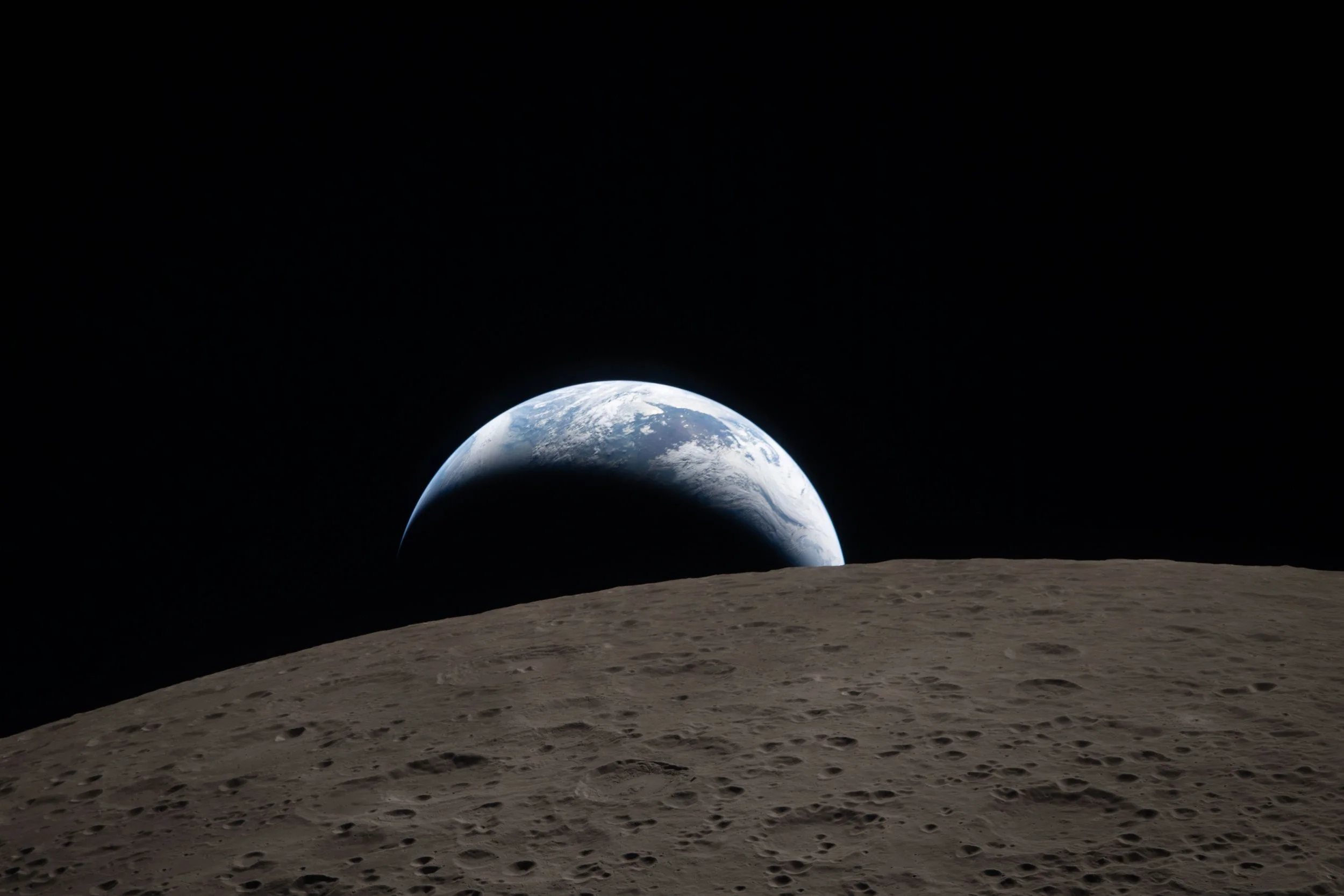
Earth Rise Taken by Artemis II on April 6, 2026
Artemis II Reminds All of Us to Look Up
By Suzanne Bowdey, The Washington Stand
April 7, 2026
When NASA set a launch date for Artemis II all those months ago, there was no way of knowing that the world would be in desperate need of something so uniquely awe-inspiring. On a planet consumed by war, hate, tragedy, and lack, these astronauts are giving the human population a rare gift: the chance to focus on what we have in common — not the differences splintering us all apart.
Looking at the brilliant blues and greens of the earth from the capsule window, the clouds swirling in lazy circles over entire continents, it’s impossible not to be struck by the breathtaking perfection of our home in the middle of an otherwise dark and endless universe. This chance to glimpse our world, nothing but a speck in the expanse of space, is an invitation to return, even as a people divided by cultures and languages and priorities, to a place of wonder and gratitude.
As Pilot Victor Glover watched the Earth get smaller and smaller in the crew’s final push toward the moon, he was moved by the chance to celebrate Easter thousands of miles away from the world Christ came to die for. “Whether you believe in God or not, this is an opportunity for us to remember where we are, who we are, and that we are the same thing — and that we’ve got to get through this together.”
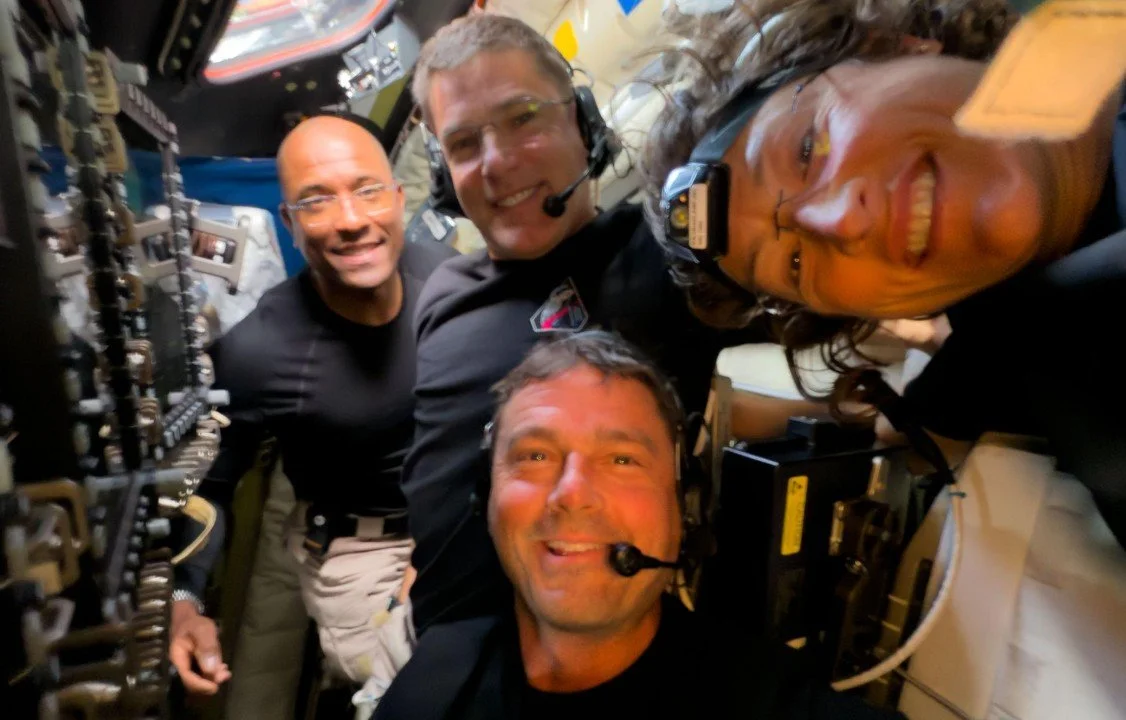
These extraordinary moments — to see our home in a way that very few humans ever will — changed him. “As we are so far from Earth and looking at the beauty of creation, I think, for me, one of the really important personal perspectives that I have up here is I can really see the Earth as one thing,” he said solemnly. “When I read the Bible, and I look at all the amazing things that were done for us. ... You guys are talking to us because we’re in a spaceship really far from earth, but you’re on a spaceship called Earth that was created to give us a place to live in the universe and the cosmos,” the astronaut replied in amazement.
“In all of this emptiness,” Victor paused, “this is a whole bunch of nothing, this thing we call the universe — you have this oasis, this beautiful place where we get to exist together.”
It was a profound realization that his crew, Reid Wiseman, Christina Koch, and Canadian astronaut Jeremy Hansen, all shared. Glover, who brought communion cups and his Bible on a previous mission, has been clear about his most important message to Earth since before the launch: “We need Jesus, whether on Earth or circling the moon.”
But there were some lighthearted moments for the foursome, Christina told the press and mission control. “We did hide a few eggs around the cabin,” she smiled. “They were the dehydrated scrambled egg variety, but we were all pretty happy with them.”
Psalm 148: 2-13
Praise the Lord from the heavens;
praise him in the heights above.
Praise him, all his angels;
praise him, all his heavenly hosts.
Praise him, sun and moon;
praise him, all you shining stars.
Praise him, you highest heavens
and you waters above the skies.
Let them praise the name of the Lord,
for at his command they were created,
and he established them for ever and ever— he issued a decree that will never pass away.
Praise the Lord from the earth,
you great sea creatures and all ocean depths, lightning and hail, snow and clouds,
stormy winds that do his bidding,
you mountains and all hills,
fruit trees and all cedars,
wild animals and all cattle,
small creatures and flying birds,
kings of the earth and all nations,
you princes and all rulers on earth,
young men and women,
old men and children.
Let them praise the name of the Lord,
for his name alone is exalted;
his splendor is above the earth and the heavens.
By Monday morning, the Easter bunny was the last thing on any of the astronauts’ minds, as the Orion capsule set out for its first brush with the dark side of the moon. Breaking the 1970 Apollo 13 distance record of 248,655 miles from Earth, the crew has officially traveled farther from the world than any humans in history. The lunar flyby, which was the first time the naked eye had seen a large swath of the moon, gave astronauts a chance to photograph “high-priority targets” on what they described as an “impossibly rugged” landscape. Breaking up into pairs, the crew took shifts at the windows of the blacked-out cabin, taking pictures and making observations of the surface they’d been studying for months.
“Just having this crew describe visuals of the moon, visuals of the lunar surface, will give you goosebumps,” Dr. Kelsey Young, lead for NASA’s Science Mission Directorate, shook her head. “They are absolutely prepared not just to give really scientifically compelling descriptions, but also to bring that experience verbally to us watching here on Earth.”
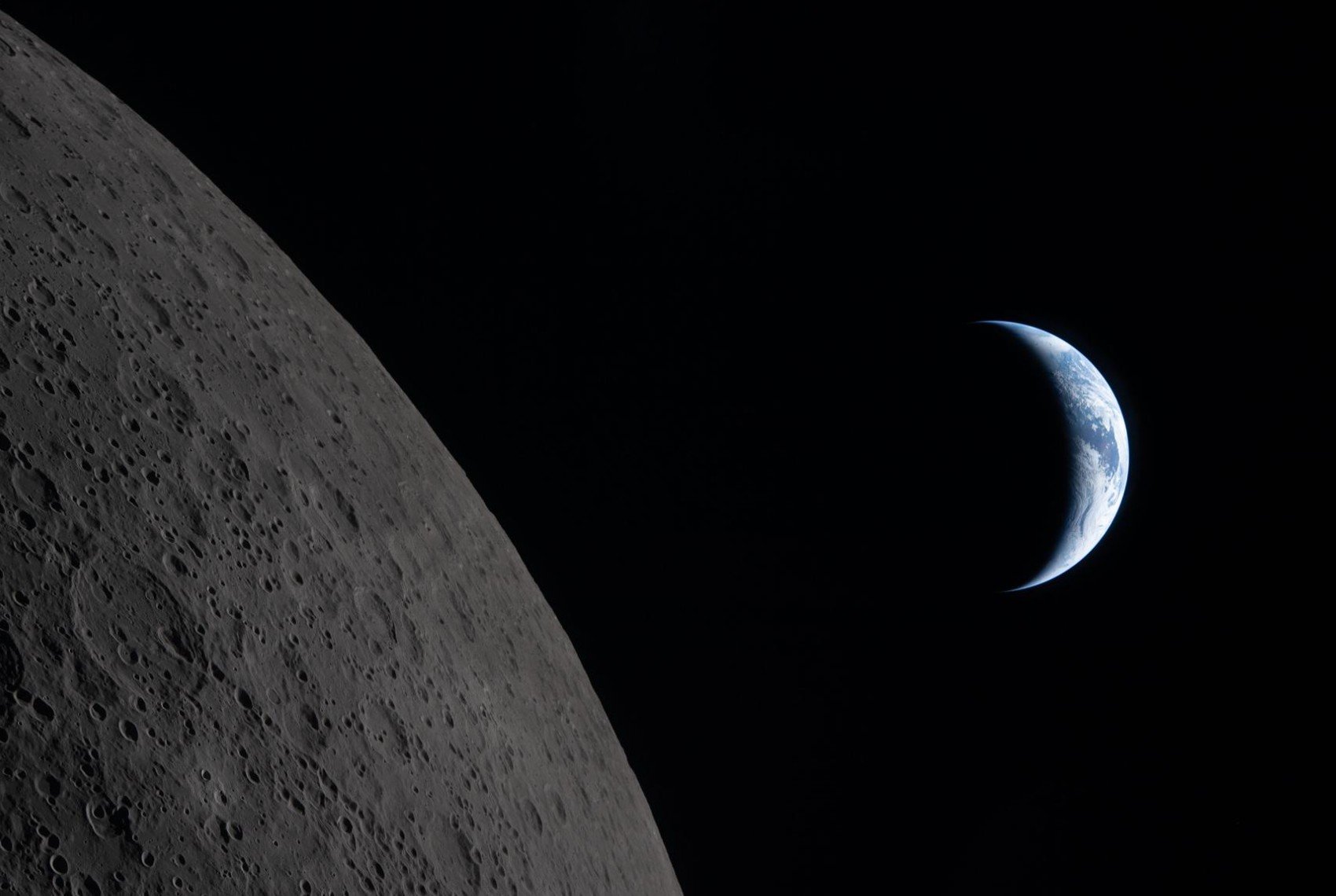
At one point, the moon and their home planet were visible at the same time, a surreal moment before they became “two identical crescents” during the trip around. With tears in their eyes, the astronauts decided to name one of the craters “Carroll” after Commander Wiseman’s late wife, who died of cancer in 2020. “During some times of the moon’s transit around Earth, we will be able to see this,” he said emotionally. “And it’s a bright spot on the moon.”
Back home, on the ground, the astronauts’ families were on hand in Houston to see and cheer one of the biggest days in space travel. “Hey, babe,” Victor said over comms to his wife, Dionna, “I love you. From the moon.”
The significance of Monday’s mission wasn’t lost on former NASA Administrator Sean O’Keefe, who sat down with Family Research Council President Tony Perkins on “Washington Watch” to explain what’s special about this trip. “This is actually going to go about 4,500 miles further afield from the moon itself than we’ve ever been. So this will be the longest, deepest space mission that any human has ever witnessed,” he reiterated “It’s an extraordinary effort to really test out all the systems to assure that the Orion capsule itself, the part that actually is the space capsule, is going to have the full capacity on the next mission to have astronauts actually land on the moon again.”
Along those same lines, O’Keefe points out that Artemis II “sets up the opportunity to eventually re-enter and land on the moon again and establish a presence there, as opposed to what we did in the 1970s, which was we went there five times, saw it, understood it. And yet, at the same time, we concluded that this was not much more than a pretty dusty object that orbited the earth and not much more value. Now we understand it’s got a lot more value to it. Helium is available there, which is an energy technology production capacity. There’s water that we’ve discovered there,” he added, “which means you’ve got all the ingredients for actual creation of life that we did not imagine were there when we were there back in the 70s. So we’re learning.”
As part of Monday’s milestones, the astronauts flew behind the moon, where contact with Earth was broken for 40 tense minutes. “We’ll see you on the other side,” Glover told mission control before all communication was lost. Less than an hour later, the crew was back online for another first — witnessing a solar eclipse from space. “The sun has gone behind the moon, and the corona is still visible.” Victor described. “…The Earth is so bright out there, and the moon is just hanging in front of us. ... We can see stars and the planets behind it. It just looks unreal,” Glover continued. “You can still see the horizon lit up brighter where the sun set on that side of the moon. … Wow. It’s amazing.”
And maybe what they’re doing goes beyond space and records and science. Maybe the most important thing Artemis has accomplished is reminding us that we are all, as Victor said, “one people.” One people, on one planet, in one universe created by a loving and powerful God. That no matter what the challenges are or how deeply fragmented we are, we’ll always be connected. Humans, who look up at the sky — together.
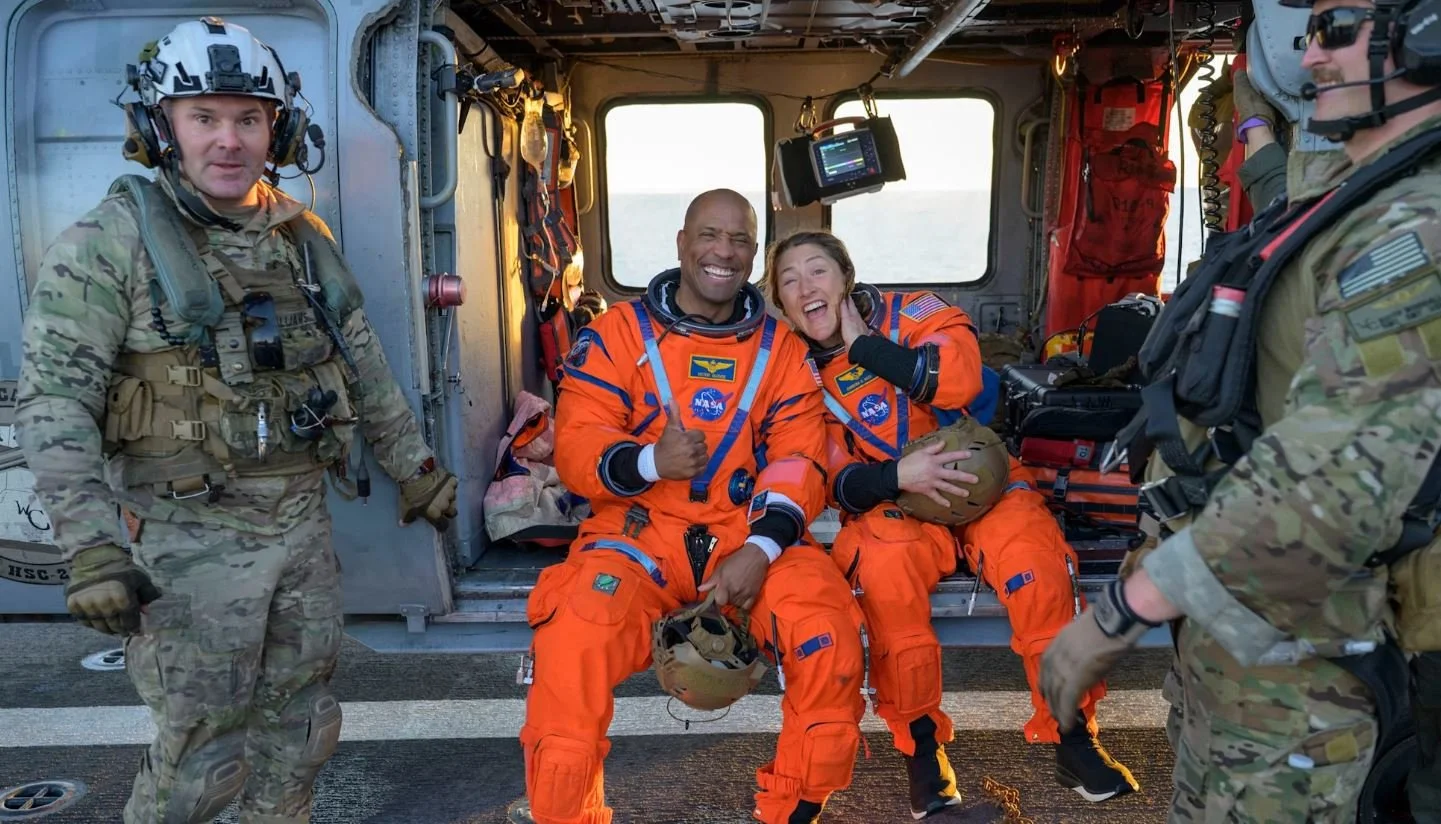
“When I consider your heavens, the work of your fingers, the moon and stars, which you set in place — what is mankind that you are mindful of them, human beings that you care for them? You have made them a little lower than the angels and crowned them with glory and honor. You have made them rulers over the works of your hands; you put everything under their feet … Lord, our Lord, how majestic is your name in all the earth!”