The Journey From Fear to Faith
INTRODUCTION
Last month I received email from a woman named Mia Grace. In her email she said she would love the opportunity to contribute a faith-strengthening article to the website. I replied telling her I would be pleased to post her article. We continued to communicate and this week I received from her the following short bio along with her beautifully written essay.
My name is Mia Grace, and I’m a Christian writer currently based in Pakistan. I came across Treasures in the Field while reading the “From Fear to Faith” devotion, which deeply resonated with me and inspired me to reach out. My heart for writing is to encourage believers in their walk with Christ—especially in seasons of uncertainty, spiritual struggle, and growth—by pointing them back to God’s faithfulness in everyday life.
I pray that Mia’s article will be an encouragement to you in your journey with Christ. And for those who are struggling with fear may you know that the Lord invites you to trust Him to lead you from fear to faith in His promises. Finally, please hold in your prayers Mia and all our Christian brothers and sisters in Pakistan for the Lord’s protection from the widespread discrimination and persecution they currently face. Amen.
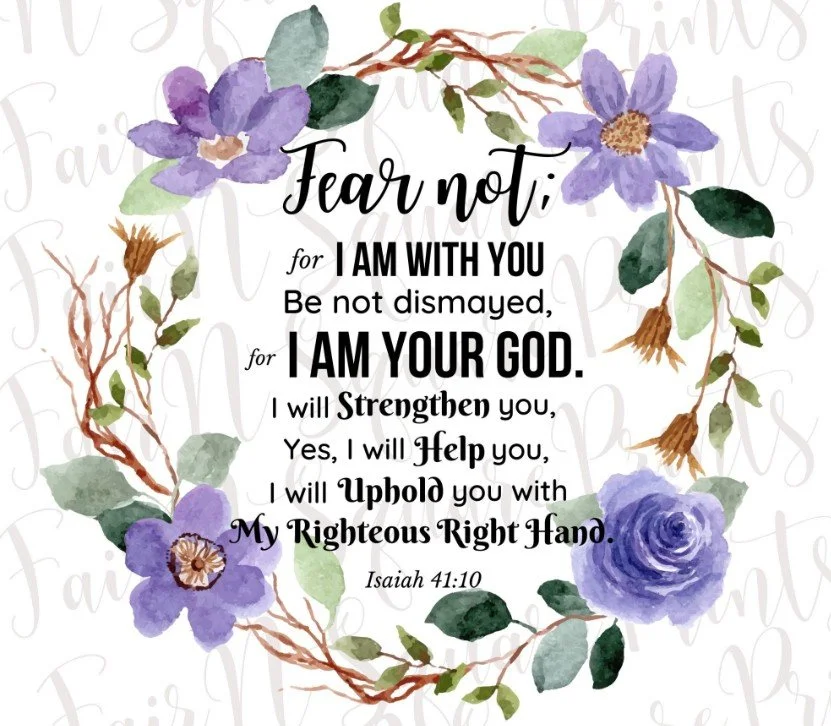
From Fear to Faith:
The Quiet Surrender That Changes Everything
By Mia Grace
Fear rarely announces itself as fear.
More often, it shows up as overthinking, hesitation, perfectionism, or the constant need to “figure everything out.” It sounds like logic. It feels like responsibility. It even disguises itself as ambition. But underneath all of it, there is a quieter truth: fear is the desperate attempt to control what was never ours to control in the first place.
And that’s where the story begins—not with bold courage, but with quiet exhaustion.
When Control Becomes a Cage
At some point, most of us realize that no amount of planning can fully protect us from life. You can do everything “right” and still face loss. You can prepare endlessly and still feel unready. You can build certainty and still be shaken.
Fear thrives in this gap between effort and outcome.
It whispers:
What if it goes wrong?
What if you’re not enough?
What if this falls apart?
So we grip tighter. We analyze more. We delay decisions. We wait for clarity that never quite arrives.
But here’s the uncomfortable truth: the tighter we hold on, the more fragile everything feels.
Control, when driven by fear, doesn’t create safety—it creates tension.
The Misunderstood Power of Surrender
Surrender is often mistaken for defeat. It sounds passive, almost like giving up. But real surrender is not about abandoning effort—it’s about releasing illusion.
It is the moment you recognize:
“I have done what I can. The rest is not mine to carry.”
This shift is subtle, almost invisible from the outside. There are no grand gestures. No dramatic turning points. Just a quiet internal decision to stop fighting reality.
And strangely, that’s where strength begins.
Because surrender is not the absence of action—it’s the absence of resistance.
You still show up. You still try. You still care deeply. But you are no longer anchored to a specific outcome for your sense of peace.
Fear Wants Certainty. Faith Chooses Trust.
Fear and faith are often framed as opposites, but they actually coexist.
You don’t eliminate fear to have faith. You move forward with fear—and that movement is faith.
Fear says: “I need guarantees before I begin.”
Faith replies: “I will begin, and discover what unfolds.”
Fear demands proof.
Faith builds it through experience.
This is why the transition from fear to faith isn’t a switch—it’s a practice. A repeated choice. A quiet discipline.
It looks like:
Taking a step when you still feel unsure
Speaking when your voice shakes
Letting go of outcomes you’ve rehearsed a hundred times in your head
Faith is not loud confidence. It is quiet willingness.
Learning Trust Through Real Stories
Sometimes faith feels abstract—until you see it lived out in real lives. There’s something powerful about witnessing how others navigate uncertainty, loss, and hope. Stories have a way of grounding belief into something tangible.
For those who find encouragement in lived experiences, collections like Christian Women offer glimpses into how faith unfolds in ordinary—and extraordinary—moments. Not as perfect journeys, but as honest ones shaped by surrender, struggle, and trust.
The Psychology Behind the Shift
On a deeper level, fear is rooted in the brain’s survival system. It is designed to detect threats—even imagined ones—and keep you safe. That’s why it feels so convincing. Your mind is trying to protect you.
But here’s the paradox: the same system that protects you from danger can also prevent you from living fully.
Faith doesn’t ignore this system—it retrains it.
Each time you act despite fear, you send a new signal:
“This is safe enough. I can handle this.”
Over time, your internal world recalibrates. What once felt terrifying becomes manageable. What once felt impossible becomes familiar.
So the shift from fear to faith is not just spiritual—it’s deeply internal. You are reshaping how you experience uncertainty itself.
The Quiet Surrender Moments We Overlook
We tend to associate transformation with big milestones. But the real shift happens in small, almost invisible decisions.
It happens when:
You stop replaying a conversation and let it be
You release the need to be understood by everyone
You accept that not all questions will be answered right now
You choose peace over being “right”
These moments don’t look like breakthroughs—but they are.
They are the building blocks of a life rooted in faith rather than fear.
What Changes—and What Doesn’t
Here’s what most people don’t tell you: when you move from fear to faith, your external life may not immediately change.
Challenges don’t disappear. Uncertainty doesn’t vanish.
What changes is your relationship with them.
You stop seeing uncertainty as a threat and start seeing it as space—space for growth, for redirection, for something unexpected to emerge.
You become less reactive, more grounded. Less consumed by “what if,” more engaged in “what is.”
And perhaps most importantly, you stop outsourcing your peace to outcomes.
Faith Is Not Always Peaceful
There’s a misconception that faith feels calm all the time. It doesn’t.
Sometimes faith feels like:
Moving forward without clarity
Letting go of something you deeply wanted
Trusting a path you didn’t choose
It can feel uncomfortable, even unsettling.
But beneath that discomfort, there is a steadiness—a quiet knowing that you don’t need to have everything figured out to keep going.
That’s the difference.
Fear panics in uncertainty.
Faith breathes through it.
The Identity Shift
At its core, this journey is not just about emotions—it’s about identity.
When you live in fear, you see yourself as someone who must control life to survive it.
When you move into faith, you begin to see yourself differently:
As someone who can handle life.
As someone who can adapt.
As someone who doesn’t break when things don’t go as planned.
This shift changes how you approach everything—relationships, work, decisions, even failure.
You stop asking:
“What if this goes wrong?”
And start asking:
“Will I be okay if it does?”
That single question changes everything.
The Quiet Freedom on the Other Side
The most profound outcome of surrender is not success, clarity, or even happiness.
It is freedom.
Freedom from constant mental noise.
Freedom from needing to predict every outcome.
Freedom from tying your worth to results.
And in that freedom, something unexpected happens—you begin to live more fully.
You take chances. You speak honestly. You rest without guilt. You trust more, not because life is predictable, but because you are no longer afraid of unpredictability.
The Ongoing Return
This is not a one-time transformation.
Fear will return—in new forms, at new stages, in new situations.
But once you’ve experienced the shift, you recognize it faster. You recover quicker. You return to trust more easily.
And that’s the real power of this journey.
Not that fear disappears—but that it no longer defines you.
In the end, the move from fear to faith is not about becoming fearless. It’s about becoming someone who no longer needs certainty to move forward.
It’s about loosening your grip, softening your resistance, and trusting that life does not require your constant control to unfold.
It’s a quiet surrender.
And somehow, that quiet choice changes everything.

Watercolor by Lillias Trotter (See the post titled “A Story and a Song” for her inspiring story)