Introduction
I remember clearly about 53 years ago when the words of this amazing Christmas carol left me in awe. I was with my close friend, Jerry, and we were driving through town in a 1964 VW Bug on a chilly evening in December. The windows were down, the radio turned up, and as the fresh air swept through the car, this song began playing and we enthusiastically sang along. This moment led to a most memorable Christmas as it was the first one where I began to hear clearly in my favorite carols the “good news of great joy that shall be for all the people.”
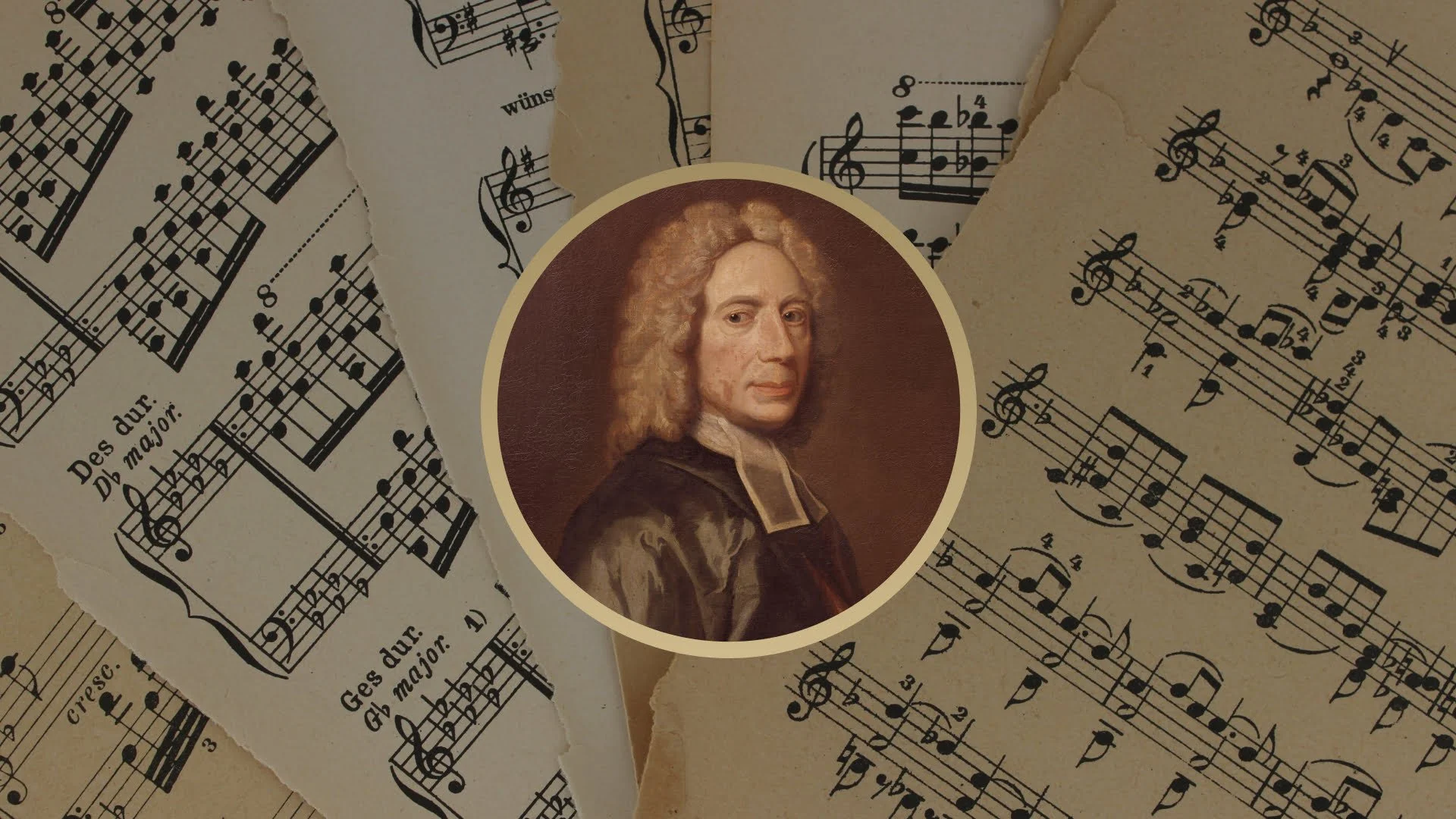
This post includes a brief history of this carol written by Isaac Watts (1674-1748). I was surprised to learn that this song was inspired by Psalm 98 and point to Christ’s second coming - not his first. Also included is a illuminating biography on Watts and a joyful rendition of the song performed by Jehovah Shalom, a Ugandan gospel group my father and I discovered last Christmas. May each of us hear the “good news of great joy” this season with awe and wonder - “For unto you is born this day in the city of David, a Savior, who is Christ the Lord.”
LYRICS
1. Joy to the world; the Lord is come;
Let Earth receive her King;
Let ev'ry heart prepare him room,
And heav'n and nature sing.
2. Joy to the Earth, the Savior reigns;
Our mortal songs employ,
While fields and floods, rocks, hills and plains,
Repeat the sounding joy.
3. No more let sins and sorrows grow,
Nor thorns infest the ground;
He comes to make his blessings flow
Far as the curse is found.
4. He rules the world with truth and grace,
And makes the nations prove
The glories of his righteousness,
And wonders of his love.
The Story Behind the Song: Joy to the World
By Erin Zimmerman
While most Christmas carols focus on the story of the nativity in the past, one well-known hymn encourages Christians to look forward to the future.
Claire Pfann, Academic Dean at University of the Holy Land, says, “There is one Christmas carol that is unlike all others, having to do with the coming of Jesus. That song, Joy to the World, is not about the First Coming of Jesus. That hymn is about the Second Coming of Jesus.”
“Joy to the World” was originally part of a book of poems written in by the great English hymn writer, Isaac Watts in 1719. Based on the 98th Psalm, the poem was never intended to be a Christmas song… or any kind of song, for that matter. And Watts never knew that he had just written one of his most famous hymns.
A century later a Boston music teacher named Lowell Mason discovered the poem and set it to music. Because it was released at Christmastime, it quickly became a holiday favorite and went on to become the most published Christmas carol in America.
“Joy to the World, the Lord is come. Let earth receive her King. Let every nation prepare Him room and heaven and nature sing. He rules the world with truth and grace and makes the nations prove the wonders of His majesty.” It’s about when He comes again finally and rules in power and justice and mercy.
Psalm 98 (NIV)
Sing to the LORD a new song,
for he has done marvelous things;
his right hand and his holy arm
have worked salvation for him.
The LORD has made his salvation known
and revealed his righteousness to the nations.
He has remembered his love
and his faithfulness to the house of Israel;
all the ends of the earth have seen
the salvation of our God.
Shout for joy to the LORD, all the earth,
burst into jubilant song with music;
make music to the LORD with the harp,
with the harp and the sound of singing,
with trumpets and the blast of the ram’s horn—
shout for joy before the LORD, the King.
Let the sea resound, and everything in it,
the world, and all who live in it.
Let the rivers clap their hands,
let the mountains sing together for joy;
let them sing before the LORD,
for he comes to judge the earth.
He will judge the world in righteousness
and the peoples with equity.
Issac Watts Biography
From Matters of Life and Death Teaching Series
On July 17, 1674, a premature baby named Isaac was born to the Watts family in Southampton, England. When he was still a nursing infant, the child’s father, Isaac Watts Sr., was imprisoned for his religious views. The tiny infant’s devoted mother carried him to the local jail so that the new father could look upon his firstborn son through the bars of his window.
The tiny baby Isaac Watts lived. However, his entire life he would always be weak and have ill health. His father was not a minister but a clothier who served as a deacon in the local Congregational Church. For his status as a dissenter, Isaac Watts Sr. was twice imprisoned for the sake of the truth.
Young Isaac was inspired by his father’s noble example. The son would one day write a hymn that may have been inspired in part by his father’s courage; the younger penned in his hymn of the same title:
I’m not ashamed to own my Lord
Or to defend his cause . . . .
When merely a toddler, little Isaac demonstrated an early love for books, language, and knowledge of all sorts. It’s reported that one day he shouted out to his parents, “A book! A book! Buy a book!” Isaac loved words; by the age of five, he was already proficient in Latin!
As a young boy, Isaac Watts also had a striking ability to speak in rhyme, even when those talking to him were using ordinary speech. The story is often told how one evening, while his father was leading in family Bible reading and prayer, a mouse climbed up a rope along the fireplace. The boy held his peace until the prayer was ended, then he burst out in merriment, saying, “A mouse, for want of better stairs, ran up a rope to say his prayers.”
Like many parents who tire of their children’s repeated idiosyncrasies, Isaac’s parents grew weary of his constant versification. When he was disciplined for overdoing his rhymes, the boy replied, “Oh, Father, do some pity take, And I will no more verses make.”
Isaac Watts was endowed by God with a mind that hungered for knowledge, and he longed for the righteousness of Christ to be granted to him by grace. When he was seven years old, he wrote this acrostic using the letters of his own name:
I am a vile, polluted lump of earth
So I’ve continued ever since my birth
Although Jehovah, grace doth daily give me
As sure this monster, Satan, will deceive me
Come therefore, Lord, from Satan’s claws relieve me
Wash me in Thy blood, O Christ
And grace divine impart
Then search and try the corners of my heart
That I in all things may be fit to do
Service to Thee, and Thy praise too.
By the time he was nine, Isaac Watts could read Greek. Two years later, he could converse in French. At the age of thirteen, he was reading the Hebrew Bible. His mind seemed to absorb knowledge as a sponge, and the Word of God filled his mind and heart.
When he was fifteen years old, Isaac Watts was brought near to death with an attack of smallpox. The disease scarred his body for life, leaving ugly marks on his face and body.
Eventually, Isaac Watts fell in love with a young lady named Elizabeth. She admired his learning and his abilities but could not accept his physical appearance. She said, “I admire the jewel, but I cannot accept the casket [jewelry box].” Crushed by this rejection, Isaac Watts remained a bachelor the rest of his life.
Isaac Watts served God and God alone for the rest of his life. The time that most men devote to nurturing their wives and raising their children, he poured into learning and teaching. Mr. Watts was offered a scholarship to go to Oxford, but as a firm dissenter, he refused to become an Anglican.
Mr. Watts did attend a dissenter’s school in London, but he was largely self-taught. Grieved by the flat, lifeless singing in most churches around him, he longed for something better. When Isaac Watts was nineteen, his father encouraged him to try writing something better. Try he did. His first hymn was “Behold the Glories of the Lamb,” drawn from Revelation Chapter 5.
For two years, Isaac Watts wrote a hymn every single week; the hymns were sung in the church where his father served as a deacon. He continued to write hymns over the coming years and was occasionally asked to preach.
In 1702, on the very day that Isaac Watts turned twenty-four years old, he was ordained as the pastor of Mark Lane Independent Chapel. He now filled the pulpit once occupied by the Puritan theologian John Owen. Over the coming decade, he continued to write hymns, preach sermons, and study varied topics, such as logic, grammar, astronomy, philosophy, and geography. His mind, already filled with Scripture, was a ready instrument in the Master’s hand.
In 1712, another debilitating illness left Mr. Watts so weakened that he could not continue to minister in the pulpit. A kind, generous family in the congregation offered for their pastor to come spend a week on their comfortable estate outside of London. This week of rest turned into thirty-six years! Isaac Watts was an invalid and suffered from jaundice and neuralgia for the remainder of his life.
Although the outward man was perishing, the inward man was being renewed day by day. Isaac Watts went on to write over 600 hymns, among them are such favorites as “Joy to the World,” “Jesus Shall Reign,” “I Sing the Mighty Power of God,” “Alas, and Did My Savior Bleed,” “Come We That Love the Lord,” “There Is a Land of Pure Delight,” and “When I Survey the Wondrous Cross.”
In addition to his hymn writing, Mr. Watts wrote a book on logic that is still recognized as a standard authority today. He also wrote a helpful book called The Improvement of the Mind, as well as dozens of shorter works on history, astronomy, and world geography. He corresponded with men across the ocean in New England, such as revivalist preacher Jonathan Edwards and the Mathers, who were a family of Puritan preachers. Isaac Watts rejoiced to follow the progress of America’s Great Awakening.
Mr. Watts realized that he served an omniscient God, a God Who knows all things. By God’s grace, a man can improve his own mind by filling his heart with Scripture, by singing powerful songs of truth, and by diligent study of God’s Word and ways. The hymns of Isaac Watts proclaim God’s Word and His truth, and in learning the words of those songs, one can aptly praise our omniscient God!
In 1739, Mr. Watts suffered a debilitating stroke when he was sixty-five. But he continued to write hymns, dictating the texts to a secretary. He lived another nine years before his eyes closed for the final time on November 25, 1748, at the age of seventy-four. Isaac Watts left behind no wife, no children, no land, no house, and no inheritance. But he left his mark forever upon the world, filling the hearts of millions, some yet unborn, with inspiring psalms, hymns, and spiritual songs that glorify the Lord and edify the believer.
The next time you open a hymnal, you will not fail to notice the name of Isaac Watts. Pause and give thanks to God for the sacrificial life of Isaac Watts, “The Father of English Hymnody.”