His Name Shall Be Called Wonderful
Introduction
The incredible book of Isaiah records the life and prophecies of Isaiah, whose prophetic ministry spanned over 50 years from about 740 to 686 B.C. He is considered the most prominent of the four major prophets of the Old Testament (Isaiah, Jeremiah, Ezekiel, and Daniel). Of all the prophets, Isaiah reveals more about the birth, character, sacrifice, and eternal kingdom of the coming Messiah. When Jesus announced His ministry (Luke 4) he went to the synagogue in Nazareth and read from the scroll of the prophet Isaiah, “The Spirit of the Lord is on me, because he has anointed me to proclaim good news to the poor. He has sent me to proclaim freedom for the prisoners and recovery of sight for the blind, to set the oppressed free, to proclaim the year of the Lord’s favor.” After rolling up the scroll he sat down and declared, “Today this scripture is fulfilled in your hearing.”
In this post we will ponder one of the most beautiful of Isaiah’s messianic prophecies and read excerpts from a sermon Charles Spurgeon preached in 1858, “His Name Shall Be Called Wonderful.” Last, I’ve included a spirted rendition from Handel’s “Messiah” on Isaiah 9:6, “For Unto Us a Child is Born.”
If you have not yet discovered that Jesus is wonderful, I pray that you may be blessed to recognize and respond to this truth in this Advent season. Amen.
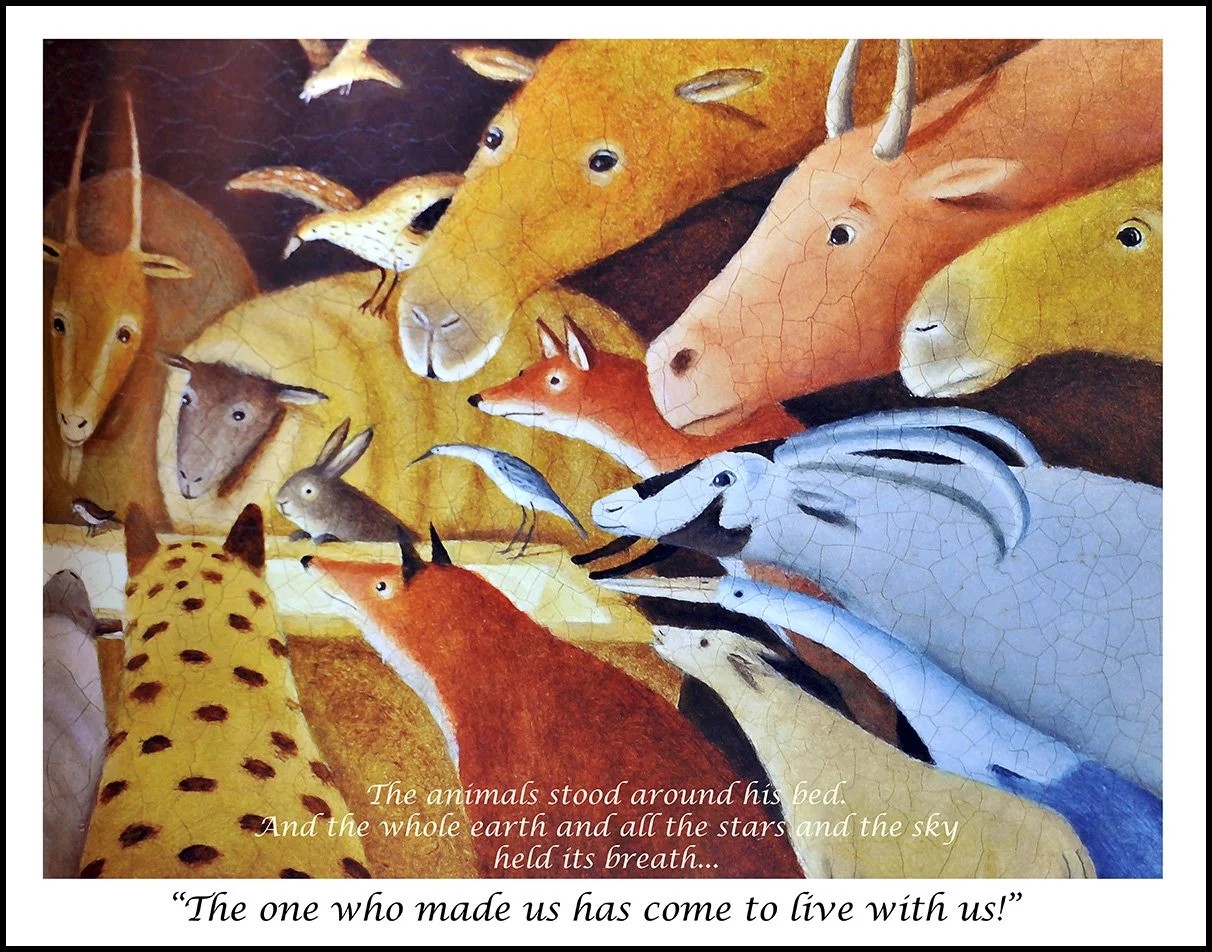
“For unto us a child is born, unto us a son is given: and the government shall be upon his shoulder: and his name shall be called Wonderful, Counsellor, The mighty God, The everlasting Father, The Prince of Peace. Of the increase of his government and peace there shall be no end.”
Excerpt of Sermon by Charles Spurgeon #214
September 19, 1858 at the Music Hall, Royal Surrey Gardens
ONE evening last week I stood by the seashore when a storm was raging. The voice of the Lord was upon the waters. And who was I that I should tarry within doors when my Master’s voice was heard sounding along the water? I rose and stood to behold the flash of His lightnings and listen to the glory of His thunders.
The sea and the thunder were contesting with one another—the sea with infinite clamor striving to hush the deep-throated thunder, so that his voice should not be heard. Yet over and above the roar of the billows might be heard that voice of God, as He spake with flames of fire and divided the way for the waters.
It was a dark night, and the sky was covered with thick clouds, and scarce a star could be seen through the rifts of the tempest—but at one particular time, I noticed far away on the horizon, as if miles across the water—a bright shining, like gold. It was the moon hidden behind the clouds, so that she could not shine upon us. But she was able to send her rays down upon the waters, far away, where no cloud happened to intervene.

Photograph by Larry Ricksen
I thought as I read this chapter last evening, that the prophet seemed to have stood in a like position when He wrote the words of my text. All round him were clouds of darkness. He heard prophetic thunders roaring and he saw flashes of the lightnings of divine vengeance—clouds and darkness for many a league were scattered through history.
But he saw far away a bright spot—one place where the clear shining came down from heaven. And he sat down and he penned these words—“The people that walked in darkness have seen a great light: they that dwell in the land of the shadow of death, upon them hath the light shined.” And though he looked through whole leagues of space, where he saw the battle of the warrior “with confused noise and garments rolled in blood,” yet he fixed his eye upon one bright spot in the future, and he declared that there he saw hope of peace, prosperity, and blessedness. For he said, “Unto us a child is born, unto us a son is given: and the government shall be upon his shoulder: and his name shall be called Wonderful.”
My dear friends, we live today upon the verge of that bright spot. The world has been passing through these clouds of darkness and the light is gleaming on us now, like the glintings of the first rays of morning. We are coming to a brighter day and “at evening time it shall be light.” The clouds and darkness shall be rolled up as a mantle that God needs no longer, and He shall appear in His glory and His people shall rejoice with Him.
But you must mark that all the brightness was the result of this child born, this Son given, whose name is called Wonderful. And if we can discern any brightness in our own hearts, or in the world’s history, it can come from nowhere else than from the One who is called, “Wonderful, Counsellor, The Mighty God.”
The person spoken of in our text is undoubtedly the Lord Jesus Christ. He is a child born, with reference to His human nature. He is born of the virgin, a child. But He is a Son given, with reference to His divine nature, being given as well as born. Of course, the Godhead could not be born of woman. That was from everlasting and is to everlasting. As a child He was born—as a Son He was given.
And mark, it does not merely say that God has given Him the name of Wonderful—though that is implied, but “His name shall be called” so. It shall be. It is at this time called Wonderful by all His believing people. As long as the moon endures, there shall be found men, and angels, and glorified spirits, who shall always call Him by His right name. “His name shall be called Wonderful.”
He is anointed with the oil of gladness above His fellows, and in His character and in His acts, He is infinitely separated from all comparison with any of the sons of men. “Thou art fairer than the children of men; grace is poured into thy lips.” He is “the chief among ten thousand and altogether lovely.” “His name shall be called the Separated One,” the distinguished one, the noble one, set apart from the common race of mankind.
We shall this morning first notice that Jesus Christ deserves to be called Wonderful for what He was in the past. Secondly, that He is called Wonderful by all His people for what He is in the present. And in the third place, that He shall be called Wonderful, for what He shall be in the future.
FIRST, Christ shall be called Wonderful for WHAT HE WAS IN THE PAST.
Gather up your thoughts, my brethren, for a moment, and center them all on Christ and you will soon see how wonderful He is. Consider His eternal existence, “begotten of his Father from before all worlds,” being of the same substance with His Father—begotten, not made, co-equal, co-eternal, in every attribute—“very God of very God.”
Oh, Christians, gather with reverence and mysterious awe around the throne of Him who is your great Redeemer, for “his name is called Wonderful,” since He has existed before all things, and “by him all things were made; and without him was not anything made that was made.”
Consider, again, the incarnation of Christ, and you will rightly say that His name deserves to be called “Wonderful.” Oh! world of wonders, what is that I see? The Eternal of ages, whose hair is white like wool, as white as snow, becomes an infant. Can it be?
Talk of the sun, moon and stars, consider you the heavens—the work of God’s fingers—the moon and the stars that He has ordained, but all the wonders of the universe shrink into nothing, when we come to the mystery of the incarnation of the Lord Jesus Christ.
There have been sights matchless and wonderful at which we might look for years, and yet turn away and say, “I cannot understand this. Here is a deep into which I dare not dive—my thoughts are drowned. This is a steep without a summit. I cannot climb it. It is high. I cannot attain it!” But all these things are as nothing compared with the incarnation of the Son of God.
Is He not rightly called Wonderful? Infinite, and an infant—eternal, and yet born of a woman—Almighty, and yet nursing from a woman’s breast—supporting the universe and yet needing to be carried in a mother’s arms—King of angels and yet the reputed son of Joseph—Heir of all things and yet the carpenter’s despised son? WONDERFUL are You, O Jesus, and that shall be Your name forever.
I do believe that Jesus of Nazareth was the King of heaven and yet He was a poor, despised, persecuted, and slandered man. But while I believe it, I can never understand it. I bless Him for it. I love Him for it. I desire to praise His name while immortality endures for His infinite condescension in thus suffering for me. But to understand it, I can never pretend. His name must all His life be called Wonderful.
That You should cast away the mantle of Your glory, the azure of Your everlasting empire, I cannot comprehend. But how You should have become veiled in the ignominious purple for a while, and then be bowed to by impious men who mocked You as a pretended king, and how You should be stripped naked to Your shame, without a single covering—this is still more incomprehensible.
“And being found in appearance as a man, he humbled himself and became obedient to death— even death on a cross! Therefore God exalted him to the highest place and gave him the name that is above every name, that at the name of Jesus every knee should bow, in heaven and on earth and under the earth, and every tongue confess that Jesus Christ is Lord, to the glory of God the Father.”
Here is matchless love—matchless love to make Him suffer and die—matchless power to enable Him to endure all the weight of His Father’s wrath. Here is matchless justice that He Himself should acquiesce in His Father’s will and not allow men to be saved without His own sufferings. And here is matchless mercy to the chief of sinners that Christ should suffer even for them. “His name shall be called Wonderful.”
But the hands that kept the human race in chains were nothing to the Savior. For on the third day He burst them and rose again from the dead, from henceforth to die no more. Oh! Thou risen Savior—You who could not see corruption—You are wonderful in Your resurrection. And You are wonderful too in Your ascension—as I see You leading captivity captive and receiving gifts for men. “His name shall be called Wonderful.”
Pause here one moment and let us think—Christ is surpassingly wonderful. The story I have told you just now—not little in itself, but little as I have told it—has in it something surpassingly wonderful. All the wonders that you have ever seen are nothing compared with this.
As we have traversed this planet we have seen many a wonder. We have seen splendid landscapes with glorious hills, and we have climbed up where the eagle seemed to knit the mountain and the sky together in his flight, and we have stood and looked down and said, “How wonderful!”.
But when we speak of Christ, none can say they ever saw a greater wonder than He is. You have come now to the very summit of every thing that may be wondered at. There are no mysteries equal to this mystery, there is no surprise equal to this surprise. There is no astonishment, no admiration that should equal the astonishment and admiration that we feel when we behold Christ in the glories of the past. He surpasses every thing.
SECOND, He is wonderful for WHAT HE IS IN THE PRESENT.
And here I will not diverge, but will just appeal to you personally. Is He wonderful to you? Let me tell the story of my own wonderment at Christ, and in telling it I shall be telling the experience of all God’s children.
I may not have told in your hearing the story of my own woe. Perhaps never a soul went so near the burning furnace of insanity and yet came away unharmed. I have walked by that fire until these locks seemed to be crisp with the heat thereof. My brain was racked. I dared not look up to God and prayer that was once my solace, was cause of my fright and terror, if I attempted it.
I shall never forget the time when I first became restored to myself. It was in the garden of a friend. I was walking solitary and alone, musing upon my misery, much cheered as that was by the kindness of my loving friend, yet far too heavy for my soul to bear. When on a sudden the name of Jesus flashed through my mind. The person of Christ seemed visible to me. I stood still. The burning lava of my soul was cooled. My agonies were hushed. I bowed myself there and the garden that had seemed a Gethsemane became to me a Paradise. And then it seemed so strange to me that nought should have brought me back but that name of Jesus.
I thought indeed at that time that I would love Him better all the days of my life. But there were two things I wondered at. I wondered that He should be so good to me and I wondered more that I should have been so ungrateful to Him. But His name has been from that time “Wonderful” to me and I must record what He has done for my soul.
And now, brothers and sisters, you shall all find, every day of your life—whatever your trials and troubles—that He shall always be made the more wonderful by them. He sends you troubles to be like a black foil, to make the diamond of His name shine the brighter. You would never know the wonders of God if it were not that you find them out in the furnace.
THIRD, although the text is infinite and one might preach upon it forever. I have only to notice that His name shall be called Wonderful IN THE FUTURE.
The day is come, the day of wrath, the day of fire. The ages are ended. The last century, like the last pillar of a dilapidated temple, has crumbled to its fall. The clock of time is verging to its last hour. It is on the stroke. The time is come when the things that are made must disappear.
Such will be your astonishment, when Christ, whom you have despised today—Christ, whom you would not have to be your Savior—Christ, whose Bible you left unread, whose Sabbath you despised—Christ, whose Gospel you rejected—shall come in the glory of His Father and all His holy angels with Him. Ay, then indeed will you “behold, and wonder, and perish,” and you shall say, “His name is Wonderful.”
But do you see yonder? All is peaceful, all serene and quiet. The myriads of the redeemed are gathering round the throne. That very throne that seems to scatter as with a hundred hands, death and destruction on those who have rejected Christ, becomes the sun of light and happiness to all believers. His name to them is Wonderful. But it is the wonder of admiration, the wonder of ecstasy, the wonder of affection, and not the wonder of horror and dismay.