The Cowboy Code
Introduction
Ten years ago I attended a client’s family retreat at Covered Wagon Ranch, a dude ranch in Montana. While there I discovered in the rustic dining lodge a book titled “Cowboy Ethics: What Wall Street Can Learn from the Code of the West”. The book was written by James Owens, a 35 year Wall Street veteran, who believes that modern America has exchanged its moral principles for blind materialism, and that by returning to shared American values, we can find personal and national success again.
What struck me most about the Cowboy Code is how closely it mirrors the moral life God intends for humanity as revealed in Scripture. Curious about this, I discovered that many of the early Cowboys from the mid 19th century were men of faith, which led eventually to the emergence of the first cowboy church in Texas in the 1940’s via a radio program called “Cowboy Church in the Air”. This program was the catalyst leading to physical gatherings in the early 1970’s. This movement, focused on reaching unchurched folk with the gospel, created a welcoming environment for those who identified with the cowboy lifestyle. Today there are hundreds of cowboy churches across the U.S.
In this post I’ve included writings by (1) Oliver Mantyk on the “Ten Principles of the Cowboy Code” (with Scripture I added mirroring the key tenets of the code) and (2) Scott Ellston who ponders the question, “What is a Cowboy”? As we embark on the New Year may we take to heart the truths in this post which are echoed in Paul’s warning to the Ephesians: “Be very careful, then, how you live—not as unwise but as wise, making the most of every opportunity, because the days are evil.” (Eph 5:15-16). Amen.
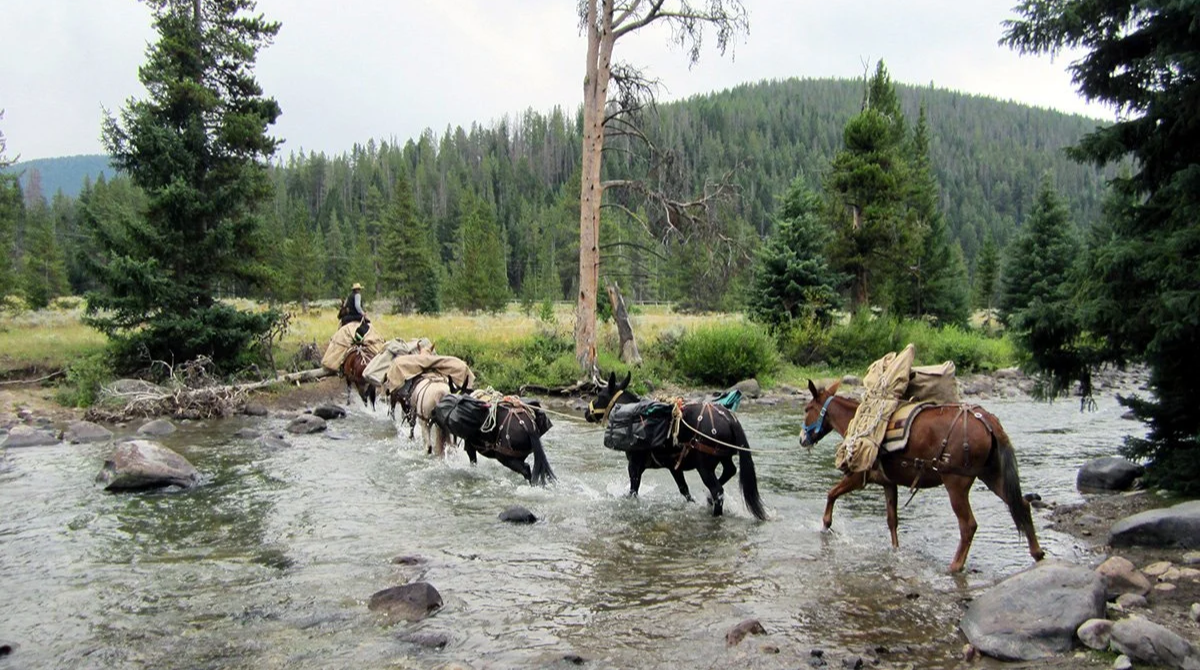
Images taken by Larry Ricksen at Covered Wagon Ranch
“A man’s got to have a code, a creed to live by, no matter his job.”
Ten Principles of the Cowboy Code
By Oliver Mantyk, 9/5/2025
When many of us think of the Wild West, we think of a place where gunmen ruled with selfish impunity, cowboys waged war on rival ranches, and the bank was the most dangerous spot in town.
Much of this was a myth, created by Hollywood directors to sell the idea of a lawless desert ruled by violence. In reality, the Western reaches of American civilization were ruled by a strict code—the code of the West. That code is what kept order and dignity on the undeveloped plains. It shaped the cowboy into a cultural avatar of American values, just as much as the horses, longhorns, and dusty ranches ever did.
James Owen, a 35-year Wall Street veteran, is the author of the best-selling “Cowboy Ethics: What Wall Street Can Learn from the Code of the West,” and “Cowboy Values: Recapturing What America Once Stood For.” Owen believes that modern America has exchanged its moral principles for blind materialism, and that by returning to shared American values, we can find personal and national success again.
Owen says that in our materialistic culture, we assume success means abundant wealth and money. But he believes that those who live by a code are able to make new definitions of success—success in improving one’s character, upholding values, and finding meaning outside of material possessions.
In the ten years since its publication, Owen’s idea of cowboy ethics and its “ten principles to live by” have been successfully put into practice on Wall Street, in classrooms, and in personal lives.
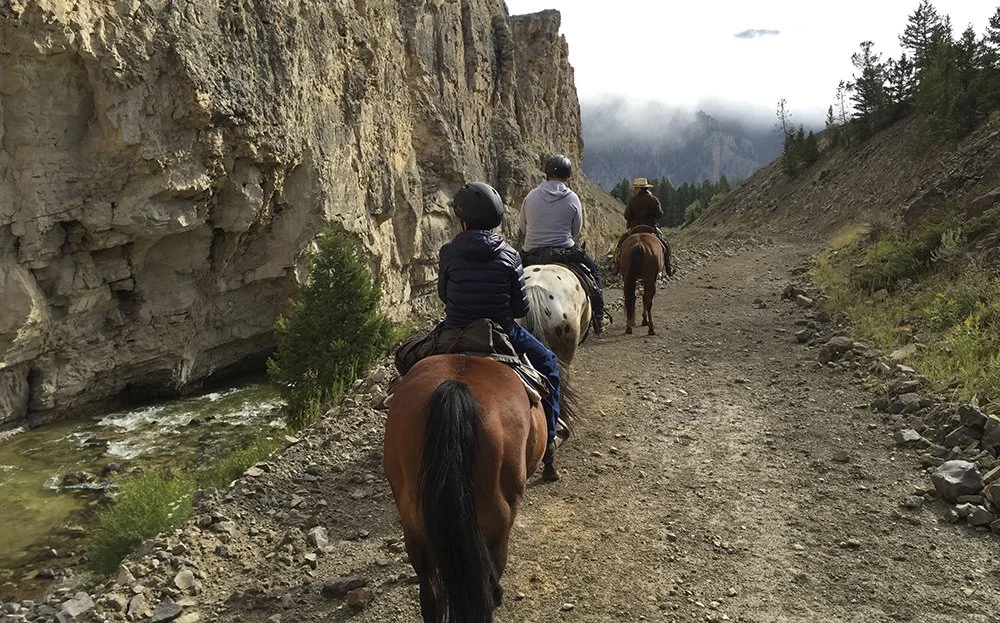
1. Live Each Day With Courage
To the cowboys of the old West, courage was as necessary as wearing boots. There were no bootless cowboys, and there were none without courage. Life was dangerous by nature, as the unrelenting elements, stampedes, and marauding natives and bandits claimed many lives.
The cowboy spirit was, out of necessity, cheerful in the face of all perils. For a cowboy, having cowardice was a danger to himself and those who relied on him. A cowboy who let his fear grip him could not do what he needed to when facing decisive moments. Courage did not mean the absence of fear; it was the ability to put fear aside when there was work to be done.
“A man wanting in courage would be as much out of place in a cow-camp as a fish on dry land,” the Texas Livestock Journal said in 1882.
“Be strong and courageous. Do not be afraid; do not be discouraged, for the Lord your God will be with you wherever you go.”
2. Take Pride in Your Work
A cowboy took pride in his work and skills. His superb riding, courage, and grit gave him the confidence to sit in the saddle like a knight on the field.
A cowboy tried to avoid any work that wasn’t in the saddle. But if he really had to dig post holes, he would do the best he could. And when he rode past that fence years later, he would feel pride that he built that fence and left his legacy on the land.
“I perceived that there is nothing better for them than to be joyful and to do good as long as they live; also that everyone should eat and drink and take pleasure in all his toil—this is God’s gift to man.”
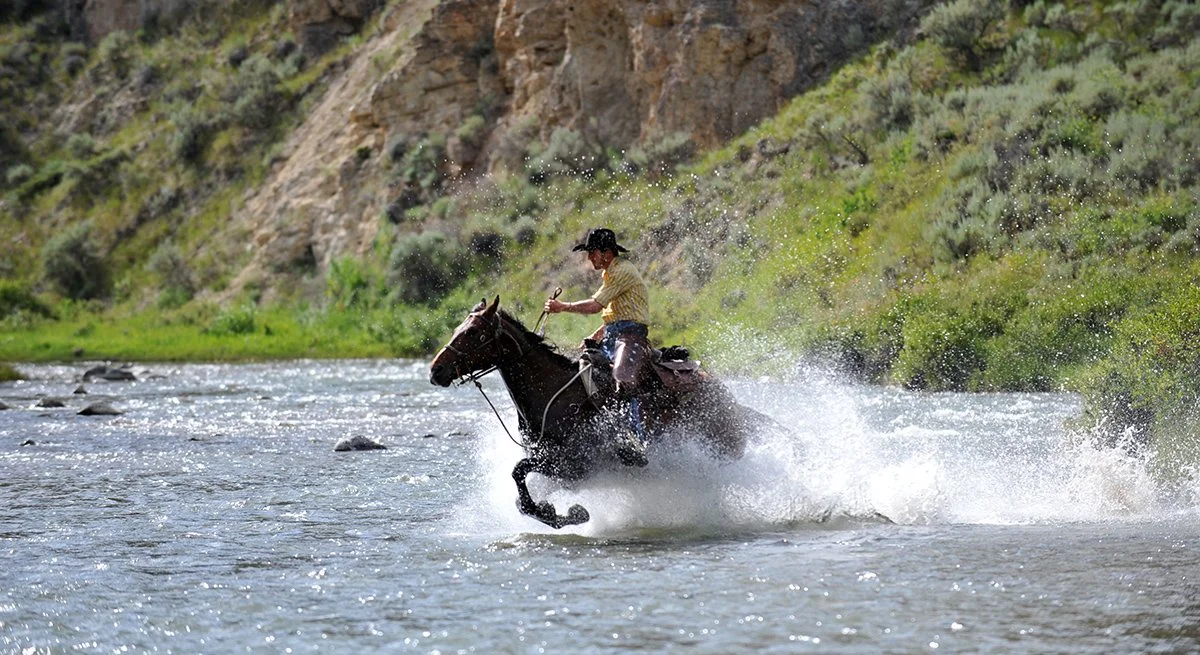
3. Always Finish What You Start
Cowboys despised quitters. They despised complainers and whiners too because to cowboys, they smelled like quitters. When the going gets tough, that’s when one needs to be the most reliable.
In the cattle drives of the old West, cowboys would often face hardships and dangers on their months-long journey from the plains of Texas to the railroads up north. Every man could trust that no one would abandon the monumental task halfway through.
“I have fought the good fight, I have finished the race, I have kept the faith. Now there is in store for me the crown of righteousness, which the Lord, the righteous Judge, will award to me on that day—and not only to me, but also to all who have longed for his appearing.”
4. Do What Has to Be Done
The cowboy, the Western hero, was a man of justice. To rectify injustice and punish evildoers: that was the code of the West enshrined in his heart. A cowboy’s honor rested upon his willingness to do the right thing. Even more honorable was the ability to stick to what was right in the face of overwhelming odds.
“A cowboy gets his strength from knowing what is right and what is wrong and being true to his beliefs. This is the essence of the Code of the West and the true cowboy way,” the Journal said.
“He has shown you, O mortal, what is good. And what does the Lord require of you? To do what is right and to love mercy and to walk humbly with your God.”
5. Be Tough, but Fair
The cowboy could weather harsh conditions, risk his life daily, and come back the next day, because to be a cowboy was to be grit and nails in boots. Cowboys prided themselves on their toughness, and that pride made them notoriously intolerant of insults.
But being tough wasn’t the only thing that kept cowboys riding. Being fair, and abiding by the Golden Rule, was considered just as important. The cowboy’s code created a symbiotic social order that was essential to life on the plains.
For example, a cowboy was entitled to enter any ranch at any time when in need of food and shelter, and was not expected to pay a penny. And if a neighbor’s cattle wandered onto a rancher’s lot, the rancher was free to sell the animal, but the rancher would be obligated to pay his neighbor the money he received for it. The Golden Rule was always upheld.
If a man was killed in a fair fight, it was simply an incident. But it was murder to kill a man who was unarmed or fleeing. Murderers had frontier justice waiting for them.
“Do to others whatever you would like them to do to you. This is the essence of all that is taught in the law and the prophets.”
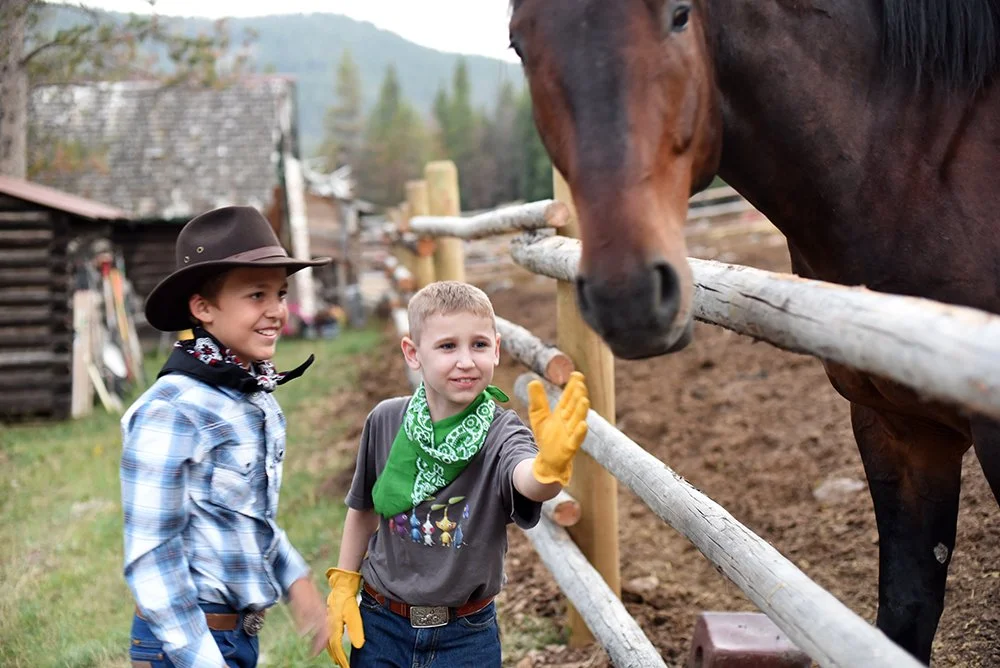
6. When You Make a Promise, Keep It
A cowboy’s promise was more binding than any legal contract.
A cowboy’s allegiance to the code was worth more than his life. In a world where a handshake was law, to break a promise was to lose the trust of every decent man on the plains.
“It is better not to make a vow than to make one and not fulfill it.”
7. Ride for the Brand
Cowboys were exceptionally loyal to their outfits. They put their outfits before their own comfort, needs, and even lives.
But cowboys weren’t loyal to their bosses simply because they were the ones who paid them. Cowboys were loyal because the boss upheld the code of the West, and expected that they would too. The boss built the ranch from nothing with just his hands, his time, and his daring. By riding with his brand, a cowboy became part of that legacy of honorable hard work.
“And whatever you do, in word or deed, do everything in the name of the Lord Jesus, giving thanks to God the Father through him.”
8. Talk Less and Say More
Part of the cowboy’s trademark was his short and pointed speech. Cowboys couldn’t stand a windbag who wasted words simply because he never ran out of them.
Cowboys needed effective and short communication while on the job. Conditions while herding cattle could change on a dime; effective communication made the job easier and kept everyone safe.
Cowboys weren’t unexpressive or too simple-minded for grander expressions. Cowboy folklorist Ramon Adams said of the cowboy that he “laid firm hands on language and squeezed the juice right out of it.”
“The one who has knowledge uses words with restraint, and whoever has understanding is even-tempered. Even fools are thought wise if they keep silent, and discerning if they hold their tongues.”
9. Remember That Some Things Aren’t for Sale
A cowboy’s dignity and way of life had no price. He would not sell it, and he would not buy it from another.
This is exemplified best in the 1970 movie “Monte Walsh.” At the beginning of the 20th century, Wyoming cowboy Monte realizes that his time as a small-time rancher is coming to an end. Larger corporations are creeping out the competition in the ranching business.
Monte ends up getting recruited to play a cowboy in a circus, but realizes that he can’t sell his way of life for any sum of money. He turns down the high-paying job and returns to struggling as a rancher.
“Do you not know that your bodies are temples of the Holy Spirit, who is in you, whom you have received from God? You are not your own; you were bought at a price. Therefore honor God with your bodies.”
10. Know Where to Draw the Line
The code of the West, the principles that cowboys lived by, was to be followed strictly. Cowboys believed that the destruction of a man’s integrity was almost never one big fall and crash, but caused by numerous cracks spreading over time. Every small step over the line of the cowboy’s code, every little cut corner or rationalized wrongdoing, was a step closer to the collapse of a man’s integrity and that of the community that relied on him.
The cowboy had to be strict in his morals and stubborn in his principles so that the fragile social structure of the Wild West could continue and life could flourish.
“The integrity of the upright guides them, but the crookedness of the treacherous destroys them.”
Conclusion
Contrary to the popular portrayal of cowboys as rogues, cowboys were more similar to medieval knights, who followed a strict code of chivalry. Indeed, the code of the West and the chivalric code are similar in many ways, highly valuing courage, honor, and justice.
By modern standards, the cowboys of the Wild West were no saints: they cursed, smoked, and drank profusely, with little knowledge of table manners. But their legacy shapes America to this day, and it'd be best not to forget the principles that made them stand out as icons of American folklore. Live each day remembering the way of the cowboy; grit, honesty, and fairness.
Anyone who can put these ten principles into practice will find satisfaction in their life and actions, and achieve success not measurable in money.
Paul’s Ethical Exhortations to the Roman Church
“Love must be sincere. Hate what is evil; cling to what is good. Be devoted to one another in love. Honor one another above yourselves. Never be lacking in zeal, but keep your spiritual fervor, serving the Lord. Be joyful in hope, patient in affliction, faithful in prayer. Share with the Lord’s people who are in need. Practice hospitality.
Bless those who persecute you; bless and do not curse. Rejoice with those who rejoice; mourn with those who mourn. Live in harmony with one another. Do not be proud, but be willing to associate with people of low position. Do not be conceited.
Do not repay anyone evil for evil. Be careful to do what is right in the eyes of everyone. If it is possible, as far as it depends on you, live at peace with everyone. ”
The Cowboy Way
Finding Grit, Grace, and God in the Quiet Places
By Scott Ellston, An Ordinary Man (7/1/25)
What is a Cowboy that makes him/her a cowboy? Is it living on a farm, a ranch, raising cattle, or growing wheat that requires owning or riding a horse? If I were to ask one what they believe a cowboy is, that answer would be short, sweet, and simple. The wording might be colorful, but the tone and heart would most likely be full of grace. So, what is it that makes a Cowboy a Cowboy?
At times he's a David, other times a Solomon, and at different times a King Saul, but also a simple shepherd, as well as a Moses, Jacob, Joshua, and sometimes a Daniel or Gideon. But make him mad, and he becomes a blind Samson. Always on the right side of things because common sense prevails, and respect prevails. Even when they are down and out, lost in themselves or in a bottle or worse, ... and broke, there still lies a good heart, just broken like Job, but as peaceful as Jesus. A father, a son, a rebel, but a worker, one who shows up, never gives up, cares for animals like they are people, and treats them both with respect and love greater than many ever know.
A cowboy isn’t just a profession. He’s a type of man—a reflection. Some days he’s David, dancing and fighting with his whole heart. On other days, he’s Solomon, full of wisdom, but wrestling with his desires. Sometimes he’s King Saul—driven, proud, blind to his own downfall. And when he’s lost or wandering, he’s just a simple shepherd, overlooked like Moses or limping like Jacob. He’s a fighter like Joshua. A seer like Daniel. A coward like Gideon until God calls him “mighty man of valor.” But make him mad… and he turns into Samson—blind, strong, and swinging.
He might be down and broken and maybe broke in more ways than one, but don’t mistake that for empty. Beneath the dust is a heart still alive. Even busted up like Job, there’s still a quiet peace about him, one that looks a whole lot like Jesus sleeping through storms. He’s a son. A father. A rebel. A worker. A man who shows up when others walk away. Who cares for animals like they’re kin? Who gives respect and expects the same? Not perfect. Just present. Just real.
The Word “Cowboy” Ain’t in the Bible—But the Life Sure Is
The cowboy’s not named in Scripture—but he’s there. Over and over again. A man on the edge of the crowd. Called by God. Riding through the wilderness with more questions than answers.
The Cowboy Way didn’t start in Texas. It started in caves. In stables. In deserts where no one sees. The Bible’s full of them—men who walked with God in silence long before they ever spoke to a crowd… if they ever did
Cowboys are a mix of wild and loyal, flawed and faithful. They’re not always understood. They don’t always fit inside the camp. They do their best work alone or with a small crew. They're protectors, shepherds, wanderers, and warriors. And most of the time... they're in the wilderness.
Jesus — The True Cowboy King
You may think this is a far-fetched idea, but do you realize that Jesus, our Messiah, was born in a stable, as the Scriptures state? Out here, we call that a barn. Yes, born in a barn. No palace. No parades. Just hay, blood, and the smell of livestock. And that wasn't an accident. It was intentional placement.
Why are the animals watching? They're not just scenery. They’re witnesses. He came into the world not in a palace, not in robes, not surrounded by soldiers or scholars, but among livestock and straw. Not a room at the inn. Just a feed trough. Smelled like hay, dirt, sweat, and dung. That’s how He wanted it. Because He wasn’t coming for the proud. He was coming for the lowly. The ordinary. The overlooked. People like shepherds. People like you. People like me.
When Jesus stated that He had no place to lay His head (Luke 9:58), how many of us can relate at one time or another? How did the cowboy way begin in the West? The truest of them had no place to call home; they felt more comfortable singing to cows and spent many a night under the stars. That didn't make them special, but it did make them something different.
Our fascination with cowboys and outlaw folklore has existed since the West was young, but never as much as we thought. They rode into town on a horse. Jesus rode into town on a donkey. A healer of the sick and infirm, filled with peace in a storm, laying down His life willingly without flinching. Jesus is the Cowboy Way fulfilled—grace, grit, and God in perfect form.
So when someone asks, “Who was the cowboy in the Bible?” the honest answer might be: “He was the man outside the camp, the one who heard God in the quiet, who fought lions in secret, who carried the call with calloused hands.” It’s not about the position or location. It’s about the spirit.
“For you know the grace of our Lord Jesus Christ, that though He was rich, yet for your sake He became poor, so that you through His poverty might become rich.” (2 Corinthians 8:9)
Final Thoughts — A Trail That Still Leads Home
The cowboy way reflects something Jesus lived before any man ever wore boots or spurs. Someone might say, “Cowboy isn’t in the Bible.” But the shepherd is. Wilderness is. Sacrifice is. Silence is. Strength under pressure is. The cowboy isn’t a title—it’s a spirit, a pattern, a posture.
My point is this: the word cowboy fits us all if we’re still worried about titles. Jesus just wants that relationship with you, right where you are. Whether you lay your head on a pillow or a saddle, whether you drive a Mercedes or a Ford pickup with counting marks on the side of the cab—four lines and a slash through them to make five.
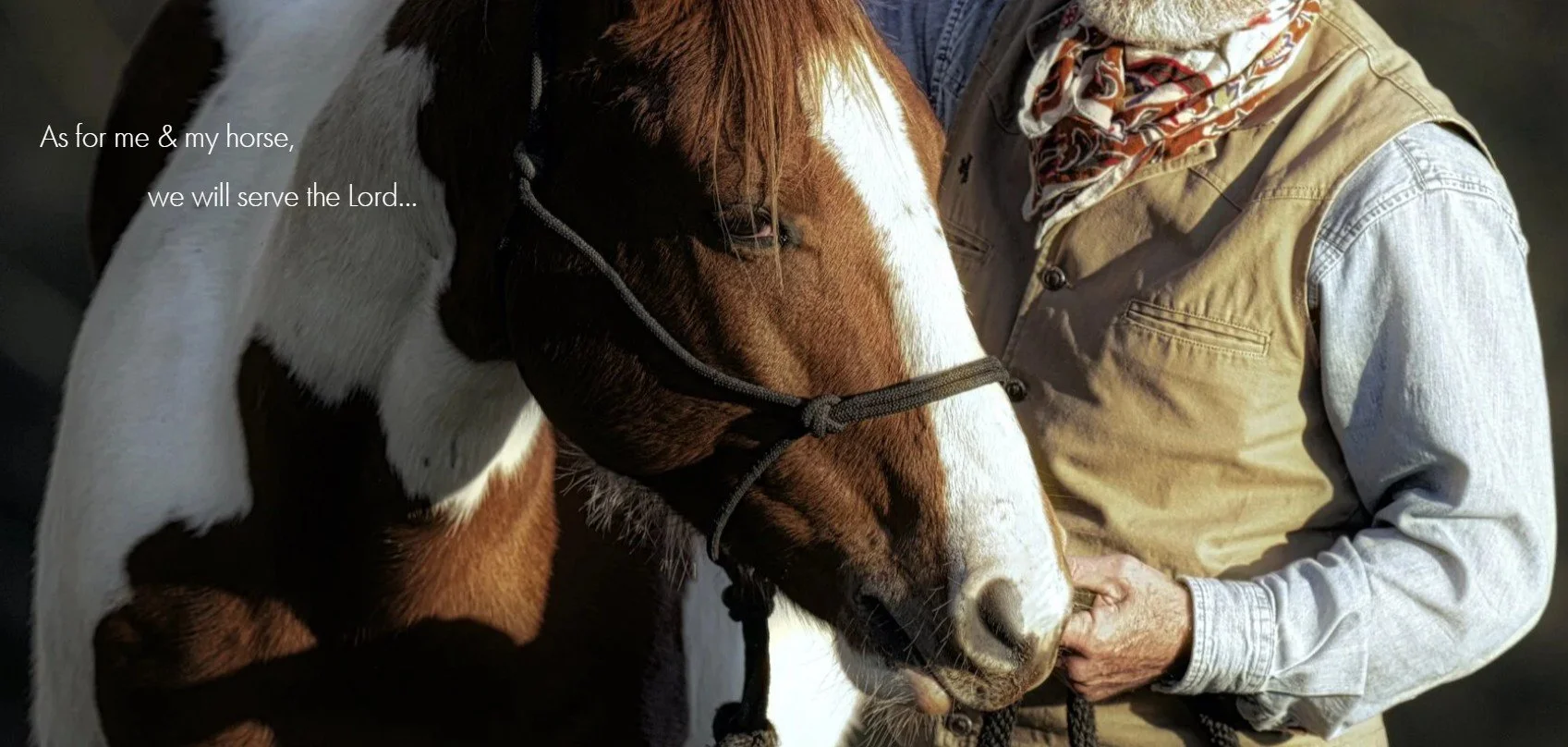
Picture on God’s Horseback Gospel Website
We used a pencil we kept in the door pocket, so we could erase them later. You counted every cow, every load. But when the day was done, you checked the tally marks above from the day before. Erasing yesterday’s marks to make room for tomorrow.
That’s how grace works, too. Jesus sees what’s been counted—and He’s willing to wipe the slate clean.
“Although the Lord has given you bread of deprivation and water of oppression, He, your Teacher, will no longer hide Himself, but your eyes will see your Teacher. And your ears will hear a word behind you, saying, ‘This is the way, walk in it,’ whenever you turn to the right or to the left.” (Isaiah 30:20-21)
“Rules are important- whether the cowboy code or the Ten Commandments. They point to boundaries for living that help to keep us healthy and happy. Problem is, we end up breaking the rules no matter how hard we try. That’s why Paul said that the “letter” or commandments of the Old Covenant brought death. Why? Because it showed us we were wrong without giving us a way to be made right. But that’s exactly what the new covenant does through Jesus Christ and the work of the Spirit. Nothing will replace the saving work of Jesus and the power of the Holy Spirit. When we’ve experienced this new life, we can then use the boundaries as guides to walk in the Spirit. Oh Lord, help us embrace the Spirit who gives life, in Jesus’ name.”