The Visited Planet
Introduction
Today as we embark on a New Year, just a week after celebrating Christmas, I believe it’s beneficial to once again ponder the significance of the birth of Jesus over 2,000 years ago. Sadly the Christmas season has gradually become so commercialized that it’s easy to be distracted and fail to be moved with awe and wonder at the birth we claim to celebrate. This was the certainly the case with Charlie Brown who, depressed by the commercialization of Christmas, cries out, “Isn’t there anyone who knows what Christmas is all about?”
Paul Neuberger has observed, “Christmas has been made safe. Predictable. Marketable. Comfortable. And in doing so, we have stripped it of its power.” Philip Yancey notes this as well as he writes, “The facts of Christmas, rhymed in carols, recited by children in church plays, illustrated on cards, have become so familiar that it is easy to miss the message behind the facts. After reading the birth stories once more, I ask myself, If Jesus came to reveal God to us, then what do I learn about God from that first Christmas?”
This post contains an excerpt from chapter 2 (The Visited Planet) of Philip Yancey’s thought-provoking book titled, “The Jesus I Never Knew”. In this chapter Yancey ruminates on the incredible moment when God stepped into human history as a fragile and dependent baby to live among us and what this event revealed to him about God. I’ve closed the post with a humbling video that helps us realize how truly blessed we are that the Creator of everything chose to visit our planet.
May Yancey’s ponderings and the birth accounts from the gospels of Matthew, Luke, and John bless you with a deeper love and gratitude to God for who He is and what He has done to save us. Amen.
The Gospel Birth Accounts
(From Matthew, Luke, and John)
Matthew 1:18-25 . . . This is how the birth of Jesus the Messiah came about: His mother Mary was pledged to be married to Joseph, but before they came together, she was found to be pregnant through the Holy Spirit. Because Joseph her husband was faithful to the law, and yet did not want to expose her to public disgrace, he had in mind to divorce her quietly.
But after he had considered this, an angel of the Lord appeared to him in a dream and said, “Joseph son of David, do not be afraid to take Mary home as your wife, because what is conceived in her is from the Holy Spirit. She will give birth to a son, and you are to give him the name Jesus, because he will save his people from their sins.”
All this took place to fulfill what the Lord had said through the prophet: “The virgin will conceive and give birth to a son, and they will call him Immanuel” (which means “God with us”).
When Joseph woke up, he did what the angel of the Lord had commanded him and took Mary home as his wife. But he did not consummate their marriage until she gave birth to a son. And he gave him the name Jesus.
Luke 1:26-38 . . . In the sixth month (of Elizabeth’s pregnancy), God sent the angel Gabriel to Nazareth, a town in Galilee, to a virgin pledged to be married to a man named Joseph, a descendant of David. The virgin’s name was Mary. The angel went to her and said, “Greetings, you who are highly favored! The Lord is with you.”
Mary was greatly troubled at his words and wondered what kind of greeting this might be. But the angel said to her, “Do not be afraid, Mary, you have found favor with God. You will be with child and give birth to a son, and you are to give him the name Jesus. He will be great and will be called the Son of the Most High. The Lord God will give him the throne of his father David, and he will reign over the house of Jacob forever; his kingdom will never end.”
“How will this be,” Mary asked the angel, “since I am a virgin?”
The angel answered, “The Holy Spirit will come upon you, and the power of the Most High will overshadow you. So the holy one to be born will be called the Son of God. Even Elizabeth your relative is going to have a child in her old age, and she who was said to be barren is in her sixth month. For nothing is impossible with God.”
“I am the Lord’s servant,” Mary answered. “May it be to me as you have said.” Then the angel left her.
Luke 2:1-20 . . . In those days Caesar Augustus issued a decree that a census should be taken of the entire Roman world. (This was the first census that took place while Quirinius was governor of Syria.) And everyone went to their own town to register. So Joseph also went up from the town of Nazareth in Galilee to Judea, to Bethlehem the town of David, because he belonged to the house and line of David. He went there to register with Mary, who was pledged to be married to him and was expecting a child. While they were there, the time came for the baby to be born, and she gave birth to her firstborn, a son. She wrapped him in cloths and placed him in a manger, because there was no guest room available for them.
And there were shepherds living out in the fields nearby, keeping watch over their flocks at night. An angel of the Lord appeared to them, and the glory of the Lord shone around them, and they were terrified. But the angel said to them, “Do not be afraid. I bring you good news that will cause great joy for all the people. Today in the town of David a Savior has been born to you; he is the Messiah, the Lord. This will be a sign to you: You will find a baby wrapped in cloths and lying in a manger.”
Suddenly a great company of the heavenly host appeared with the angel, praising God and saying,
“Glory to God in the highest heaven,
and on earth peace to those on whom his favor rests.”
When the angels had left them and gone into heaven, the shepherds said to one another, “Let’s go to Bethlehem and see this thing that has happened, which the Lord has told us about.”
So they hurried off and found Mary and Joseph, and the baby, who was lying in the manger. When they had seen him, they spread the word concerning what had been told them about this child, and all who heard it were amazed at what the shepherds said to them. But Mary treasured up all these things and pondered them in her heart. The shepherds returned, glorifying and praising God for all the things they had heard and seen, which were just as they had been told.
John 1:1-14 . . . In the beginning was the Word, and the Word was with God, and the Word was God. He was with God in the beginning. Through him all things were made; without him nothing was made that has been made. In him was life, and that life was the light of all mankind. The light shines in the darkness, and the darkness has not overcome it.
There was a man sent from God whose name was John. He came as a witness to testify concerning that light, so that through him all might believe. He himself was not the light; he came only as a witness to the light.
The true light that gives light to everyone was coming into the world. He was in the world, and though the world was made through him, the world did not recognize him. He came to that which was his own, but his own did not receive him. Yet to all who did receive him, to those who believed in his name, he gave the right to become children of God— children born not of natural descent, nor of human decision or a husband’s will, but born of God.
The Word became flesh and made his dwelling among us. We have seen his glory, the glory of the one and only Son, who came from the Father, full of grace and truth.
“The Visited Planet” By Philip Yancey
Excerpts from Chapter 2 of the book “The Jesus I Never Knew”
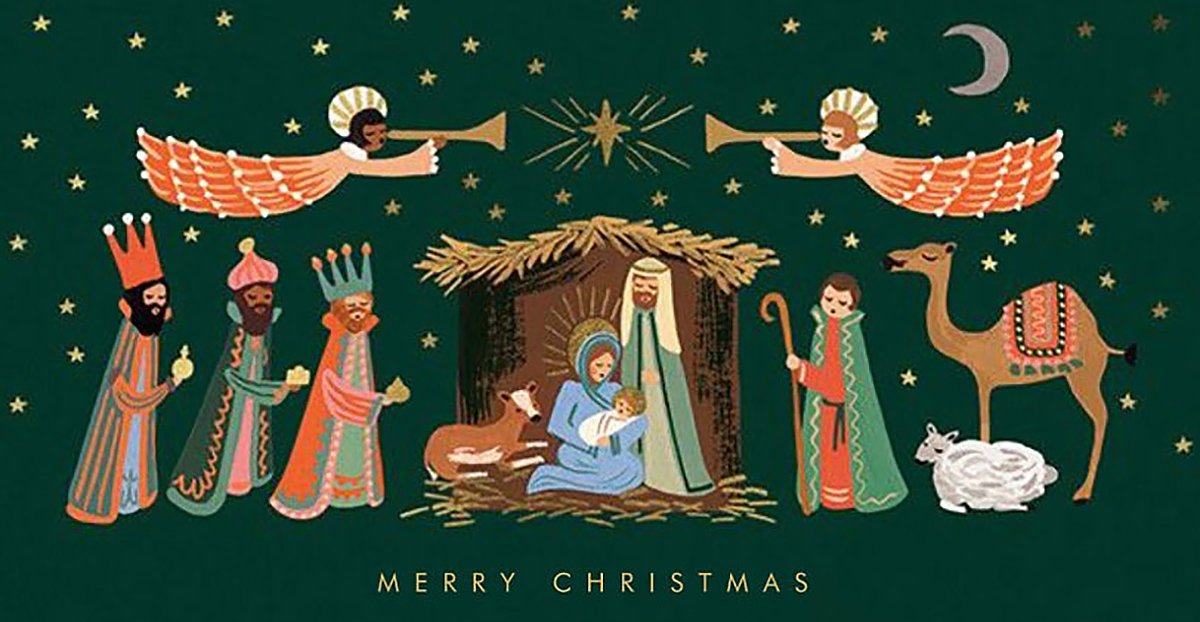
The facts of Christmas, rhymed in carols, recited by children in church plays, illustrated on cards, have become so familiar that it is easy to miss the message behind the facts. After reading the birth stories once more, I ask myself, If Jesus came to reveal God to us, then what do I learn about God from that first Christmas?
The word associations that come to mind as I ponder that question take me by surprise. Humble, approachable, underdog, courageous— these hardly seem appropriate words to apply to deity.
Humble. Before Jesus, almost no pagan author had used “humble” as a compliment. Yet the events of Christmas point inescapably to what seems like an oxymoron: a humble God. The God who came to earth came not in a raging whirlwind nor in a devouring fire. Unimaginably, the Maker of all things shrank down, down, down, so small as to become an ovum, a single fertilized egg barely visible to the naked eye, an egg that would divide and redivide until a fetus took shape, enlarging cell by cell inside a nervous teenager. “Immensity cloistered in thy dear womb,” marveled the poet John Donne. He “made himself nothing … he humbled himself,” said the apostle Paul more prosaically.
I remember sitting one Christmas season in a beautiful auditorium in London listening to Handel's Messiah, with a full chorus singing about the day when “the glory of the Lord shall be revealed.” I had spent the morning in museums viewing remnants of England's glory— the crown jewels, a solid gold ruler's mace, the Lord Mayor's gilded carriage— and it occurred to me that just such images of wealth and power must have filled the minds of Isaiah's contemporaries who first heard that promise. When the Jews read Isaiah's words, no doubt they thought back with sharp nostalgia to the glory days of Solomon, when “the king made silver as common in Jerusalem as stones.”
The Messiah who showed up, however, wore a different kind of glory, the glory of humility. “‘God is great,’ the cry of the Muslims, is a truth which needed no supernatural being to teach men,” writes Father Neville Figgis. “That God is little, that is the truth which Jesus taught man.” The God who roared, who could order armies and empires about like pawns on a chessboard, this God emerged in Palestine as a baby who could not speak or eat solid food or control his bladder, who depended on a teenager for shelter, food, and love.
In London, looking toward the auditorium's royal box where the queen and her family sat, I caught glimpses of the more typical way rulers stride through the world: with bodyguards, and a trumpet fanfare, and a flourish of bright clothes and flashing jewelry. In meek contrast, God's visit to earth took place in an animal shelter with no attendants present and nowhere to lay the newborn king but a feed trough. Indeed, the event that divided history, and even our calendars, into two parts may have had more animal than human witnesses. A mule could have stepped on him. “How silently, how silently, the wondrous gift is given.”
For just an instant the sky grew luminous with angels, yet who saw that spectacle? Illiterate hirelings who watched the flocks of others, “nobodies” who failed to leave their names. Shepherds had such a randy reputation that proper Jews lumped them together with the “godless,” restricting them to the outer courtyards of the temple. Fittingly, it was they whom God selected to help celebrate the birth of one who would be known as the friend of sinners.
Approachable. Those of us raised in a tradition of informal or private prayer may not appreciate the change Jesus wrought in how human beings approach deity. Hindus offer sacrifices at the temple. Kneeling Muslims bow down so low that their foreheads touch the ground. In most religious traditions, in fact, fear is the primary emotion when one approaches God.
Certainly the Jews associated fear with worship. The burning bush of Moses, the hot coals of Isaiah, the extraterrestrial visions of Ezekiel— a person “blessed” with a direct encounter with God expected to come away scorched or glowing or maybe half-crippled like Jacob. These were the fortunate ones: Jewish children also learned stories of the sacred mountain in the desert that proved fatal to everyone who touched it. Mishandle the ark of the covenant, and you died. Enter the Most Holy Place, and you'd never come out alive.
Among people who walled off a separate sanctum for God in the temple and shrank from pronouncing or spelling out the name, God made a surprise appearance as a baby in a manger. What can be less scary than a newborn with his limbs wrapped tight against his body? In Jesus, God found a way of relating to human beings that did not involve fear.
In truth, fear had never worked very well. The Old Testament includes far more low points than high ones. A new approach was needed, a New Covenant, to use the words of the Bible, one that would not emphasize the vast gulf between God and humanity but instead would span it.
Underdog. I wince even as I write the word, especially in connection with Jesus. It's a crude word, probably derived from dogfighting and applied over time to predictable losers and victims of injustice. Yet as I read the birth stories about Jesus I cannot help but conclude that though the world may be tilted toward the rich and powerful, God is tilted toward the underdog. “He has brought down rulers from their thrones but has lifted up the humble. He has filled the hungry with good things but has sent the rich away empty,” said Mary in her Magnificat hymn.
Perhaps the best way to perceive the “underdog” nature of the incarnation is to transpose it into terms we can relate to today. An unwed mother, homeless, was forced to look for shelter while traveling to meet the heavy taxation demands of a colonial government. She lived in a land recovering from violent civil wars and still in turmoil. Like half of all mothers who deliver today, she gave birth in Asia, in its far western corner, the part of the world that would prove least receptive to the son she bore. That son became a refugee in Africa, the continent where most refugees can still be found. I wonder what Mary thought about her militant Magnificat hymn during her harrowing years in Egypt. For a Jew, Egypt evoked bright memories of a powerful God who had flattened a pharaoh's army and brought liberation; now Mary fled there, desperate, a stranger in a strange land hiding from her own government . Could her baby, hunted, helpless, on the run, possibly fulfill the lavish hopes of his people?
Growing up, Jesus' sensibilities were affected most deeply by the poor, the powerless, the oppressed— in short, the underdogs. Today theologians debate the aptness of the phrase “God's preferential option for the poor” as a way of describing God's concern for the underdog. Since God arranged the circumstances in which to be born on planet earth—without power or wealth, without rights, without justice— his preferential options speak for themselves.
Courageous. It took courage, I believe, for God to lay aside power and glory and to take a place among human beings who would greet him with haughtiness and skepticism. It took courage to risk descent to a planet known for its clumsy violence, among a race known for rejecting its prophets. What more foolhardy thing could God have done?
The first night in Bethlehem required courage as well. How did God the Father feel that night, helpless as any human father, watching his Son emerge smeared with blood to face a harsh, cold world? Lines from two different Christmas carols play in my mind. One, “The little Lord Jesus, no crying he makes,” seems to me a sanitized version of what took place in Bethlehem. I imagine Jesus cried like any other baby the night he entered the world, a world that would give him much reason to cry as an adult. The second, a line from “O Little Town of Bethlehem,” seems as profoundly true today as it did two thousand years ago: “The hopes and fears of all the world do rest on thee tonight.”
“Alone of all creeds, Christianity has added courage to the virtues of the Creator,” said G. K. Chesterton. The need for such courage began with Jesus' first night on earth and did not end until his last.
—————————————-
There is one more view of Christmas I have never seen on a Christmas card, probably because no artist, not even William Blake , could do it justice. Revelation 12 pulls back the curtain to give us a glimpse of Christmas as it must have looked from somewhere far beyond Andromeda: Christmas from the angels' viewpoint.
The account differs radically from the birth stories in the Gospels. Revelation does not mention shepherds and an infanticidal king; rather, it pictures a dragon leading a ferocious struggle in heaven. A woman clothed with the sun and wearing a crown of twelve stars cries out in pain as she is about to give birth. Suddenly the enormous red dragon enters the picture, his tail sweeping a third of the stars out of the sky and flinging them to the earth. He crouches hungrily before the woman, anxious to devour her child the moment it is born. At the last second the infant is snatched away to safety, the woman flees into the desert, and all-out cosmic war begins.
Revelation is a strange book by any measure, and readers must understand its style to make sense of this extraordinary spectacle. In daily life two parallel histories occur simultaneously, one on earth and one in heaven. Revelation, however, views them together, allowing a quick look behind the scenes. On earth a baby was born, a king got wind of it, a chase ensued. In heaven the Great Invasion had begun, a daring raid by the ruler of the forces of good into the universe's seat of evil.
John Milton expressed this point of view majestically in Paradise Lost and Paradise Regained, poems which make heaven and hell the central focus and earth a mere battleground for their clashes. The modern author J.B. Phillips also attempted such a point of view, on a much less epic scale, and last Christmas I turned to Phillips's fantasy to try to escape my earthbound viewpoint.
In Phillips's version, a senior angel is showing a very young angel around the splendors of the universe. They view whirling galaxies and blazing suns, and then flit across the infinite distances of space until at last they enter one particular galaxy of an estimated 200 billion stars.
“As the two of them drew near to the star which we call our sun and to its circling planets, the senior angel pointed to a small and rather insignificant sphere turning very slowly on its axis. It looked as dull as a dirty tennis-ball to the little angel, whose mind was filled with the size and glory of what he had seen. “I want you to watch that one particularly,” said the senior angel, pointing with his finger. “Well, it looks very small and rather dirty to me,” said the little angel. “What's special about that one?”
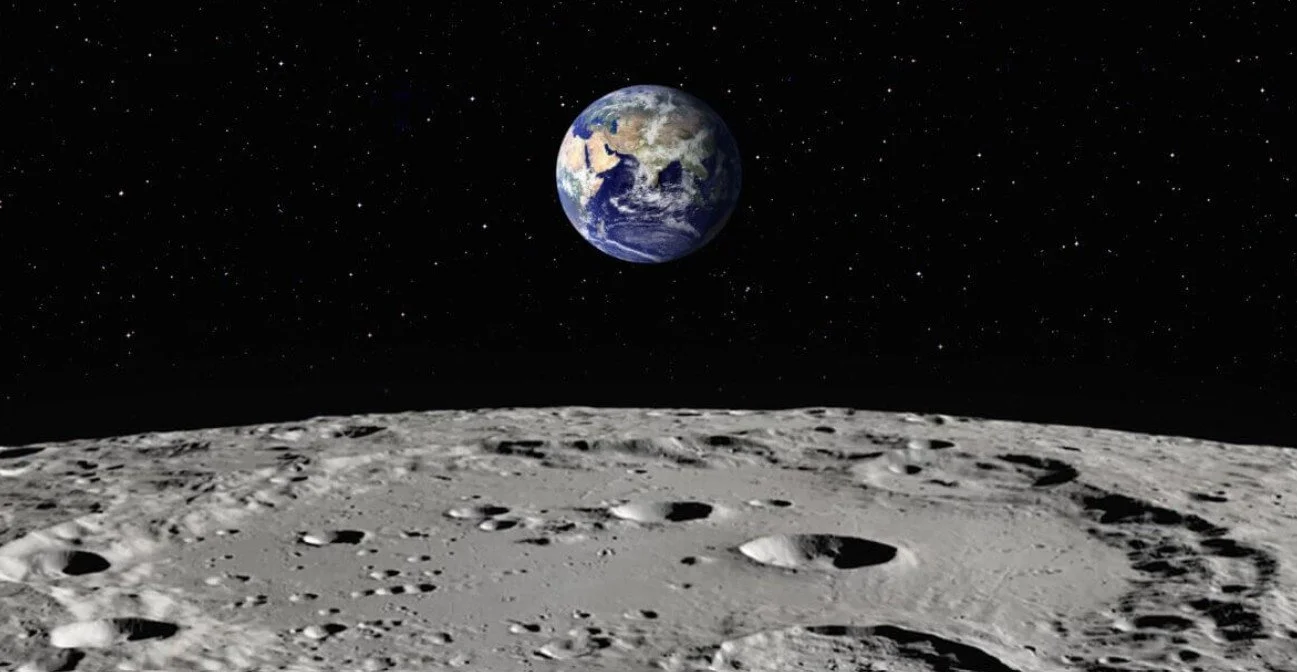
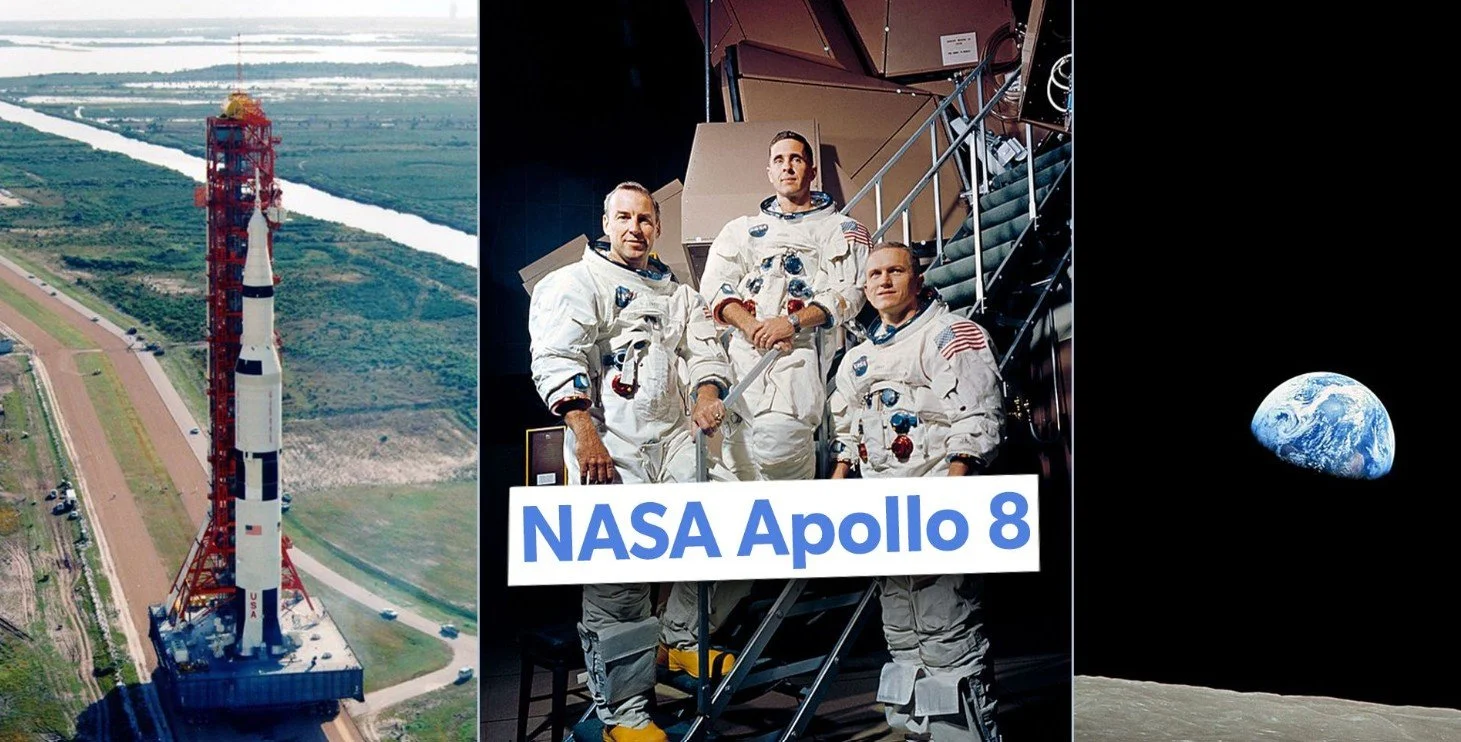
When I read Phillips's fantasy, I thought of the pictures beamed back to earth from the Apollo astronauts, who described our planet as “whole and round and beautiful and small,” a blue-green and-tan globe suspended in space. Jim Lovell, reflecting on the scene later, said, “It was just another body, really, about four times bigger than the moon. But it held all the hope and all the life and all the things that the crew of Apollo 8 knew and loved. It was the most beautiful thing there was to see in all the heavens.” That was the viewpoint of a human being.
To the little angel, though, earth did not seem so impressive. He listened in stunned disbelief as the senior angel told him that this planet, small and insignificant and not overly clean, was the renowned Visited Planet.
“Do you mean that our great and glorious Prince … went down in Person to this fifth-rate little ball? Why should He do a thing like that?” … The little angel's face wrinkled in disgust. “Do you mean to tell me,” he said, “that He stooped so low as to become one of those creeping, crawling creatures of that floating ball?” “I do, and I don't think He would like you to call them ‘creeping, crawling creatures’ in that tone of voice. For, strange as it may seem to us, He loves them. He went down to visit them to lift them up to become like Him.” The little angel looked blank. Such a thought was almost beyond his comprehension.
It is almost beyond my comprehension too, and yet I accept that this notion is the key to understanding Christmas and is, in fact, the touchstone of my faith. As a Christian I believe that we live in parallel worlds. One world consists of hills and lakes and barns and politicians and shepherds watching their flocks by night. The other consists of angels and sinister forces and somewhere out there places called heaven and hell. One night in the cold, in the dark, among the wrinkled hills of Bethlehem, those two worlds came together at a dramatic point of intersection. God, who knows no before or after, entered time and space. God, who knows no boundaries took on the shocking confines of a baby's skin, the ominous restraints of mortality.
“He is the image of the invisible God, the firstborn over all creation,” an apostle would later write; “He is before all things, and in him all things hold together.” But the few eyewitnesses on Christmas night saw none of that. They saw an infant struggling to work never-before-used lungs.
Could it be true, this Bethlehem story of a Creator descending to be born on one small planet? If so, it is a story like no other. Never again need we wonder whether what happens on this dirty little tennis ball of a planet matters to the rest of the universe. Little wonder a choir of angels broke out in spontaneous song, disturbing not only a few shepherds but the entire universe.
A Humbling Video
In closing I’ve attached below a link to a mind blowing video that scales down the size of our home galaxy, the Milky Way, to the size of the United States. It then indicates where our sun and planet earth would be located and how big they would be on this scale. As you watch the video consider that the farthest human beings have travelled from the earth is the moon. Humbled by images of “the pale blue dot” from the edge of our solar system Carl Sagan wrote, “The Earth is a very small stage in a vast cosmic arena. Our posturings, our imagined self-importance, the delusion that we have some privileged position in the Universe, are challenged by this point of pale light.” Yet Scripture declares that the Creator and Sustainer of the roughly 200 billion galaxies in the observable universe has deemed our planet to be so precious in His sight that He came and dwelt among us, entering life on earth as a helpless baby in a manager in the little town of Bethehem, in order to save us.